We Should Be Better Than This…

By Jenny Hayward-Jones, Director of the Lowy Institute’s Melanesia Program, and Alastair Davis, an intern in the Melanesia Program.

The process of rebuilding democracy in Fiji after eight years of military rule has taken a hit in recent weeks. Elections in 2014 engendered a sense of optimism for a return to representative governance, though Pacific watchers warned at the time that the successful elections should be viewed as a step in the right direction, not a panacea.

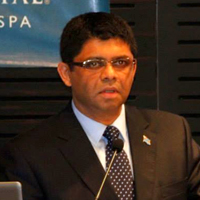
Fijian Attorney-General Aiyaz Sayed-Khaiyum, (Facebook/Fijian Government)

Last week the suspension of the National Federation Party (NFP) threw the state of democracy in Fiji into sharp relief. The situation has since worsened with the release of a statement from the parliamentary Speaker, Dr Jiko Luveni, on Thursday which suspended the three elected NFP members. The suspension was endorsed in parliament by the Fiji First majority on Thursday and the larger opposition party SODELPA walked out in protest.

The message from the governing Fiji First party that robust dissent will not be tolerated and its brazen attitude towards the rule of law are serious relapses in the restoration of democracy in Fiji.

The depth of the fissures in the Fijian parliament became clear in early January when the leader of the NFP, Dr Biman Prasad, openly considered withdrawing his MPs from parliament in protest. Prasad had signalled the opposition parties’ frustration at the rejection of bipartisanship by Prime Minister Voreqe Bainimarama’s Fiji First majority and the lack of resources afforded to the opposition parties.

Prasad’s frustrations prompted the publication of a damning op-ed in the Fiji Times that argued that Fiji’s democracy had become a facade. Prasad has been a vocal and pro-active opposition MP who has worked hard to contribute to the effectiveness of parliament. He is currently Chairman of the Public Accounts Committee, a key oversight committee that scrutinises government accounts. His chairmanship was one of the most effective opposition contributions to governance, though due to changes to standing orders passed while NFP members were excluded from parliament, Prasad  looks likely to be replaced as Committee Chairman by a Fiji First member.

Two days after the publication of Prasad’s op-ed, Supervisor of Elections Mohammed Saneem suspended the NFP for 30 days with immediate effect. The suspension notice cited non-compliance with the obligation under thePolitical Parties Decree to have party books audited by an accountant certified by the Fiji Institute of Accountants (FIA). The NFP confirmed that the company that audited their accounts — APNR — was certified in Australia but did not hold a Certificate of Public Practice in Fiji.

Section 19 of the Political Parties Decree gives the registrar the right to suspend the registration of a political party to ‘enable’ said party to remedy the breach specified in the notice of suspension. The section also provides a process for the registrar to inform the party in writing of the particulars of the breach and allow the party 60 days to remedy it. The suspension of the NFP in response to a minor administrative oversight that could have been remedied quickly and easily seems unnecessarily heavy-handed and hardly conducive to building a well-functioning parliament.

The exclusion of the MPs from parliament is more legally problematic. Section 27 (6) provides that a MP who belongs to a suspended political party shall continue on as an MP for the rest of their term. However, the solicitor general gave legal advice to the speaker that the suspension of the party extends to excluding its MPs from parliament, seemingly in direct contradiction of the Decree.

Solicitor General Sharvada Sharma works directly under the Attorney General, Bainimarama’s close ally Aiyaz Sayed-Khaiyum, who has also defended the suspension. As prominent lawyer Richard Naidu has pointed out, the lack of independent counsel for the legislature clearly undermines the separation of powers in Fiji.

The Decree itself predates the return to democracy in Fiji, having been introduced in 2013 during the period of military dictatorship. Along with the Media Decree, key pieces of legislation regulating the practice of politics in Fiji were introduced unilaterally by Bainimarama’s regime. Democracy can only flourish in Fiji when the supporting laws and institutions are strong and independent. Bainimarama himself heads the Constitutional Offices Commission, a six member group created to advise the president on public service and military office holders. SODELPA leader Ro Teimumu Kepa and Naidu were appointed to the commission in mid-2015, but Naidu resignedin November and Kepa has stopped attending meetings due to concerns over process. The three month extensionof General Sitiveni Qiliho’s appointment as acting police commissioner on 10 February reaffirmed Prime Minister Bainimarama’s reluctance to cede control over civilian institutions and preference for military officials to hold critical civil service leadership positions.

If SODELPA MPSs make their abstention from parliament permanent, Fiji will face the prospect of a sitting parliament populated only by the 32 members of the ruling Fiji First party. The quality of democracy will clearly suffer if opposition members cannot do their jobs and if government MPs are dissuaded from posing dissenting views.

Social media use has reinvigorated Fiji’s long suppressed public debate, and media outlets have enjoyed slightly more freedom to publish criticism and comment. Free speech and the capacity of citizens to hold their government to account are as important as ever for Fiji.

The Fiji First Government claims a mandate to embark on a significant legislative agenda and continue its northward strategic rebalance. Yet this mandate was won in a democratic election and is balanced by the 18 elected members of parliament who do not sit on the government benches. These 18 members also represent the people of Fiji and they must be allowed to have their voice both in and out of parliament for Fiji to be considered a democracy.

Richard The Lionheart

Another Farce in Fiji’s Parliament?

RN
Only 20 sitting days have been allowed to Parliament this year. One has already been lost to a power blackout. So why did the Government waste so much time on Tuesday voting to suspend standing orders then debating and then voting through a motion to “endorse” the Speaker’s suspension of NFP’s Members of Parliament?

Parliament cannot vote to suspend MPs unless the Speaker has named them for disorderly conduct (Standing Order 76). NFP’s MPs could not be guilty of that — they are not even there. So the Government motion is meaningless. But it may illustrate the poor understanding of certain of our current leaders of the role and function of Parliament in a democracy.

In a democracy, the people are supreme. That means that their representatives have the right to speak for them at all times, subject to very narrow exceptions. This is not a right of the parliamentary representatives or their political parties, but of the people they represent. That right cannot lightly be taken away.

Perhaps the Government’s “endorsement” motion is an attempt to put beyond judicial scrutiny the Speaker’s decision (apparently on the advice of the Solicitor-General) to suspend NFP’s parliamentarians. Time will tell whether that is correct. But a decision by a public officer, such as the Speaker, is still a decision and the law (whatever the law is) applies to that decision. A meaningless “endorsement” does not change the law in relation to that decision.

More curious is Mr Sayed-Khaiyum’s justification of the Speaker’s decision to suspend the NFP parliamentarians in the first place. He appears to think that “any duly elected Member of Parliament must be a representative of a registered political party” (which is not correct — independent MPs may be elected).

“Logically and consequently”, he says, “the suspension of registration of a political party must have the effect of suspending that party and its members from Parliament”.

But that is not what the Political Parties Decree says. Section 27(6) says clearly that if a party is suspended for an offence against the decree, its MPs continue to hold their parliamentary seats. So why would it “logically and consequently” be different for a party such as NFP, suspended merely because it is accused of not having its audit signed off properly?

But let us assume (perhaps in the face of the obvious) that Mr Sayed-Khaiyum is right. That would mean that, if his FijiFirst Party is suspended, for some (real or imagined) breach of the Political Parties Decree, “logically and consequently” Government would come to a halt. In a democracy, the Government derives its authority from Parliament.

Under Mr Sayed-Khaiyum’s Constitution, a minister can only be a minister if he is a Member of Parliament. So if a minister does not qualify to sit in Parliament (on account of his or her party being suspended), he or she cannot function as a minister. Is this “logically and consequently” how the country is supposed to be governed?

This is not “true” democracy. This is “Alice in Wonderland” democracy.

Government is a business to be carried on with respect for everybody. It is not something you make up as you go along just so you can win today’s argument.

An institution such as the Parliament (the legislature) is supposed to be separate and independent from the executive side of Government (the ministers and the civil service). This is why it is important for Parliament to have experienced, professional — and most importantly, independent — legal advisers of its own.

We think Richard is correct, so be on the lookout for yet another decree to make him incorrect.

I’m Alright Jack, My Pensions Safe..

Picture

PART 4—PROTECTIONS
Protections
11.—(1) The relevant provisions are not to be taken to be inconsistent with a human right or a similar right
of any person.
(2) Without limiting subsection (1), the relevant provisions are not to be taken to provide for a deprivation
of property of anyone.
(3) No court, tribunal or any other adjudicating body has jurisdiction or power to accept, hear, determine or in any other way entertain any challenge by any person to, or to grant any remedy or relief to any person in respect of:
(a) the validity or effect of the relevant provisions or of any regulations made under or for the purpose of any
of the relevant provisions;
(b) the validity or effect of any transfer, assignment or disposition made under or for the purposes of any of
the relevant provisions; or
(c) any loss or damage suffered by any person because of anything done in compliance or purported compliance with, or to give effect to, any of the relevant provisions.
(4) Where any relevant proceeding, claim, challenge, application or dispute of any form whatsoever is brought before any court, tribunal, commission or any other adjudicating body, the presiding judicial officer, without hearing or in any way determining the proceeding or the application, shall immediately transfer the proceeding or the application to the Chief Registrar of the High Court for the termination of the proceeding or the application, and a certificate to that effect shall be issued by the Chief Registrar of the High Court.

GIVEN under my hand this 25th day of November 2011.
EPELI NAILATIKAU
President of the Republic of Fiji
Picture
COMMENTS:

Welcome Homesaid:

February 8, 2016 at 6:33 pm

HUMAN RIGHTS ARE FOR EVERYONE

Indeed they are. This telling photograph will be a lasting epitaph to infamy, profligacy and egregious hypocrisy. Let the International Labour Organisation Commissioners take due note. The world waits ………

Sad, Sad News

David Burness and Shaista Shameem

Today Sunday 7th February  2016 Pensioner David Burness passed away after a short illness.

David Burness, his and other senior citizens treatment under Decree 51 orchestrated by the office of the Attorney General on the basis on non factual information provided by the FNPF management was the reason this blog site was launched in 2011.

Some will say the government actions accelerated Davids death, be that as it may, the battle will continue as David would wish.

RIP David Burness, you will be missed by all who knew you.

Unlike some of Fiji’s media we have always attempted to deal in facts, and the fact is, David has gone, but the class action has not, and will not.


COMMENTS:

WelcomeHomesaid:

February 8, 2016 at 2:28 pm

This action lives on. In the annals of injustice and arbitrary governance it will stand as witness to the arrogance and inhumanity of corrupt governance. It behoves any person of integrity to see it through to a just conclusion. For David Burness’ legacy and the sake of all those whom he had the courage with his Counsel to represent. History will vindicate David Burness and the Pensioners of Fiji. May his widow Talei and family be comforted at this time of great sorrow.

Really Attorney General ++++ ?

Remember when you sold the Government Printery did you or the M O E not have the foresight to ensure that textbooks would be available for our Nations Schools. ?

Now you will be in your element terrorising all and sundry in the lower ranks of the M O E with the threat of your favourite personal guard dog… FICAC.

Check it out at the following link

http://fijivillage.com/news-feature/Delay-in-delivery-of-textbooks-to-schools-this-year-9ks2r5/

The following comment from Fijileaks (http://www.fijileaks.com/home/textbook-dictator-education-ministry-is-not-in-his-ministerial-book-but-he-makes-it-his-right-to-lodge-complaint-with-ficac-against-education-officers-after-requests-to-waive-the-tenders-for-the-printing-of-textbooks#comments) sums the fiasco up perfectly::

More AG excuses confirming his incompetence to manage anything at all (Wake up Fiji, haven’t heard this all before with the delays in Free Milk, Free Water, Free Medicines!). How on earth does the international community in Fiji respect themselves for allowing an idiotic AG to control a nation? Never mind, momentary lapse. The international community is getting rich off the idiot, that’s why.

Meanwhile, a Minister of Finance goes after low level employees when the responsibility to know EVERYTHING about its Ministry should reside with the Minister. (BTW, shouldn’t the Minister of Finance also provide answers to the missing $100M?). What is the point of taxpayer moneys funding these incompetent public officials who are only costing the people more money and headaches? Wake up Fiji. this is more than enough justification for ‘No competence’ vote. If only you knew how to do it.

Meanwhile, can the Minister of Finance explain if he will now also report himself and the Roads team to FICAC for investigation of no tenders, delays in delivery, and recommendations to ‘same companies that were used last year and who also caused delays.’ What about your former Neil Sharma? or your current Bhatnagar?  Will you be reporting MoH workers for its leadership incompetence in overseeing drugs under your Free Medicine scheme is ordered on time? Is that another Procurement dept also at fault? Pathetic situation. A deluded country being led by a Suva filled with incompetent, arrogant and opportunistic ‘new Fijians’ while the rest of the country is too ignorant or paralysed to react.


FOR THE GREATER GOOD ?

hoodiejustice
WHAT IS HAPPENING TO THE RULE OF LAW AS WE KNEW IT ? Something appears to have gone terribly wrong when individuals subject to prosecution are allowed to conduct investigations .


19th January, 2016

The Acting Commissioner Of Police
Fiji Police Headquarters
Vinod Patel Complex
Laucala Beach Estate
Suva

Dear Sir

Resignation

I submit herewith my resignation from the Fiji Police after thirty (30) years of lustrous career, serving in almost all aspects of policing with effect from 20th January 2016.

I am submitting my resignation under duress, as the internal inquiry against me is contrary to good governance and best practices of our organisation. The inquiry also lacks the transparency and accountability, the two attributes that clearly forms the principles of the 2013 constitution of Fiji.

I have noted a number of flaws in the process and wish to highlight a few that I strongly feel will deny me natural justice. This whole process also contradicts a number of internal policies, not to mention our 2013 constitution particularly section 16 (Executive and administrative justice) which articulates “every person has the right to executive or administrative action that is lawful, rational, proportionate, procedurally fair and reasonable prompt.  

  • The fact that I was sent on leave straight after resuming (days) from leave is unconstitutional. A leave is an entitlement, which is earned and taken on leisure and /or not taken, compensated by the organisation. A leave cannot be forced (as in this case) to clear up some ‘ghost allegation’. The Commissioners powers under section 129 of the Constitution still has the oversight of the values and principles enshrined in the constitution particularly professional ethics and integrity.


  • I am still not aware as to who is making the allegation, and on what capacity. My last conversation with your goodself before ‘sent’ on leave was querying details of the allegation to which you told me that you do not have anything and it is with the minister. I requested for a copy of any documents available and you had assured me that you have not read anything and provide me a copy as soon as you get something. (But still thought fit/adequate to send me on leave) (It is exactly one month now).


  • The composition of the Commissioners Task Force team led by Superintendent Manasa Talala who together with another member Corporal Viliame Vereivalu are currently facing criminal charges in relation to Vilikesa Soko’s death in custody in Nadi. These charges were laid with other Police Officers by an Internal Affairs investigation when Internal Affairs Department was under my portfolio. How can a police officer investigate a senior officer when he is facing criminal charges in open court under my direction through Director Internal Affairs?


  • The other members of the Commissioners Task Force are former members of the ‘Strike Back Unit’ which I had demobilised and transferred officers out due the increasing number of complaints (of assaults/brutality or of missing exhibits).


  • I am also made aware that the team consists of an officer who, I had transferred out from the Drugs Unit due to his unscrupulous behaviour dealing with informers (this can be verified by officers at CID/HQ) .


  • I am also concerned that what started as an internal inquiry, become what appears to be a criminal investigations as a premature report of Abuse of Office (of a case which is pending appeal in the High Courts) has been lodged at Totogo Police Station.


  • The allegation is so baseless (flawed information) that the drugs seized and kept through a chain of evidence handlers (and order of high court) had to be re-opened and tested although the seal is intact and recognised by the analyst. The re-testing (still not sure under whose authority but it is now a contempt of court issue) has proven that it was NEVER tampered with. (Sadly I put this down to lack of knowledge and experience).


  • The integrity of this investigations could not have been so alarming if another Chief Officer appropriately Force Inspector General or Deputy Commissioner of Police would have overseen it, but for SSP Luke Navela to act in my position in my absence and at the same time oversee investigations against me, does not come close to fair and unbiased. The silence in this issue by Chief Officers also indicates that this was not a consultative decision.


  • The Task Force has reliably informed me that there are two (2) other allegations i.e. one in Valelevu and one in Nausori that the team is looking into however both appears to have been adequately explained by the Divisional Crime Officers. Instead of wasting a lot of resources in the witch-hunt, I would strongly advise to make available to the Task Force a document from Police Headquarters outlining the delegation of powers. Releasing a suspect for more evidence is NOT closing the file.


  • My other two concerns are that of witnesses being intimidated after being called several times to the Task Force Office to go through their statements (suggesting changes). Again a member of the Task Force and the witness who will not speak out for obvious reasons reliably informed me. The presence of Military Intelligence officers daily in the Task Force office also does not augur well for me, as these are the military officers I had ordered investigated in the ‘you tube’ beating.


With thirty (30) years of experience, appropriate qualifications and as the head of the specialised Directorates like the Intelligence Bureau and the Criminal Investigations Department, I have the expertise to recognise a procedurally (un) fair investigations and a “ghost allegations” which is fast becoming a witch-hunt.

You have advised me that some officers are talking (about the allegation) to the Minister (I still have no idea as to which Minister), however this sets a bad precedent when Ministers (politicians) listens to junior officers and sends senior officers on leave without a proper initial inquiry. The basic rule of investigations (if you have not been advised yet) is that the person (or the state) making the allegation has to prove the allegation not vice versa where the person accused has to disapprove the allegation or prove his innocence.

The way I have been briefed from inside the Task Force is that the team has no reasonable grounds at all to even interview me under caution as it totally lacks substance. Nevertheless, I have consulted my legal counsel Mr Devanesh Sharma of R. Patel Lawyers for representations and if a statement is required than the team can correspond through my counsel.

The Fiji Police Force runs deep in my blood as I have built my life around me and the blue blood cannot be replaced. I will never change anything, as I will always stick to the oath I took of carrying out my duties without fear or favour.

As such I kindly request if this resignation be accepted amicably because I will not be making any press statement unless any negative press release is made from the organisation.

By copy of this Mr Devanesh Sharma is advised to prepare any queries that you may have.

I will make arrangements for my uniform and other accessories be returned appropriately.

Thank you and wish the Fiji Police Force all the best. May the spirits of “Salus Populi”continue to be the strength.

Henry Brown
Assistant Commissioner of Police
Chief Intelligence and Investigations Officer.

FNPF Lied As Usual

AG


As did the Attorney General when he used the FNFP premise that the average age at death of Fiji Pensioners would be 78 to justify introducing Decree 51 to breach pensioners existing contracts and prevent them appealing to the Courts for justice.

The man, if one can call him that, has no shame, just self aggrandisement. 

BSP Life has collated data from a number of organisations which reveals that only 8% of Fiji’s population is aged beyond 60 years.

This is based on the Fiji Bureau of Statistics census report in 2007 which also states that only 17% of the population is aged beyond 50 years.

Only 3% of the population is over 70 years.

BSP Life has also revealed that according to a UN study on Fiji in relation to insurance in 2010, it has been found that people are using insurance as the last resort to cope with risks.

The study further highlights that premature deaths and sickness has a major impact on people’s savings.

BSP Life has also incorporated the Ministry of Health statistics on the impact of non-communicable diseases where it has been highlighted that people who are in their prime and are in senior positions with good salaries are dying when they should be most productive.

Heart disease, diabetes and stroke are the three biggest killer diseases in Fiji.