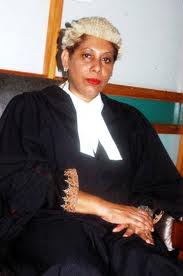
The Politics of Fiji: A Crisis of Confidence

Shaista ShameemCommentary

Now that constitutional submissions have been made on the government’s draft constitution, it is time to reflect on what the issues may be for the people of Fiji to consider as campaigns get under way in preparation for 2014. 

Acquiescence of the people with the current situation is clearly doubtful. Somehow the Bainimarama Government, for all its expressed good deeds, has not been able to grab the hearts and minds of people as foreseen in 2006. In any political situation it is the imagination of the people that needs to be captured, and not just services to them. No amount of handouts or creating better facilities will automatically create an atmosphere of consent. People will recall 1999 when the new 1997 Constitution was embraced by the voters but the political leaders who brought it into being were rejected at the ballot box. That could easily be repeated in 2014. 

So where is Fijian politics failing? And can it be fixed? 

The first question: ‘where is politics failing’ can be answered very easily. Failed politics is evidenced by a crisis of confidence. The dictionary definition of ‘crisis of confidence’ is when ‘people stop believing that something or someone is good’. That is where we are in Fiji at the moment.

Why is there a crisis of confidence? The clear answer to that question is that there is lack of trust, which is not brought about by external influences as much as it is portrayed, but by the behaviour, mind-set, qualities, competences and attitudes of the people making decisions now. My conversations with ordinary people show that they are overwhelmed by an authoritarian and conservative leadership; staggered by the extent of red tape and bureaucracy interfering with simple businesses but not with multi-national companies still enjoying themselves in Fiji; frustrated by their powerlessness and helplessness in the face of lack of information which prohibits their ability to make plans for themselves and their future, and also the future of their children; and rendered speechless by the sheer hostility and venom expressed towards any alternative ideas or thoughts about governance or even the personalities seemingly holding all the cards right now. 

All this is not a solid foundation for a happy home in Fiji. 

The crisis of confidence is more seriously related to frustration with the apparent lack of competence of the decision-makers. The bureaucracy appears to be in a muddle and very slow; the financial situation is unclear but rumours are that the national debt is increasing; the security issue is worrying since burglaries still take place and prisoners still escape; and there is lack of imagination and creativity in governance. To top it off, foreign relations are fragile, tenuous and unfulfilling. The respect for Fiji in the international community is waning- fed by broken promises, missed steps and opportunistic attitudes which take advantage of voting blocs; not realizing that, in combination, all this does is bring disrepute to the people of Fiji as a whole.

What has caused all this? It is not 2006 events as the opposition to government likes to think- the pre-2006 political boat was sinking anyway with countless discriminatory policies being enacted as law.

The cause of the current malaise seems to be lack of political and economic philosophy of governance. The main platform on which governance was supposed to be based, that of eradicating racial discrimination, is found to be precarious: government has not put into effect the anti-racist guideline recommendations of the United Nations Committee on the Elimination of Racial Discrimination (CERD Committee) delivered in 2012. 

As for the second platform, that of corruption, all that appears to have changed are the faces – the practices are reported to be the same. People can still get things done quickly if they ‘know somebody’ or are in ‘the group’. The definition of corruption, though, is more than money changing hands under the table- it has wider perceptions of unscrupulousness and ruthlessness of big business in the public environment which, if not recognized as being the case, builds up an atmosphere of mistrust which, again, would have an impact at voting time. 

The third platform, the provision of decent wages and a good standard of living, is also up for public scrutiny. Reports state that up to 50% of people may live in poverty in Fiji; even a conservative figure of 30% poverty would be too much for a country which has rich natural resources, fine weather, great primary industries, and is centrally placed to take global advantage of ‘the hub of the Pacific’. The problem is lack of imagination and creativity, not lack of investment. Fiji as its run now is just not interesting enough for people to even want to invest. Frankly, it has been made boring since 2009. The government has been so defensive about the abrogation of the 1997 Constitution that it has had no time to put into effect anything vaguely resembling a good decent wage which allows people to make a surplus to invest back into Fiji or to do creative things that would make the country vibrant and attractive. Part of the problem is the anti-fun nature of the leadership. No drinking, no dancing, no ‘funning’ (as we say in Fiji) makes the leadership very very dull indeed. Look at the outside colour of government buildings- gray and listless- does it reflect the colour of power in Fiji?

Next question: can it be fixed? For going it alone, I think that ‘fixit’ bus may have left the bus station, or the boat left the port, or the taxi gone from the taxi stand. It cannot be fixed because the serious deficit of colour, vibrancy and imagination is now woven into the very fabric of governance since 2009. It also cannot be fixed because a stalinist-type programming seems to be taking place in the minds and hearts of people. Sycophants and blind following are being encouraged by words such as ‘if you are not with me you are against me’ which is clearly silly and juvenile. Bloggers have become ranting mouthpieces for bureaucrats and advisers who love to keep robots as pets. 

Of course everyone once liked Frank Bainimarama, except the diehard few, because he brought a spirit of change and security to at least 35% of people, which is a significant minority in Fiji. The Qoliqoli Bill had really frightened that significant minority. 

But Frank is setting himself up to be unpopular because there are too many questions about his support group that remain unanswered- for example, we should ask- where is the competency in the legal advice you are getting because there is no evidence of it in the laws being decreed and in the draft constitution 2013? Do big companies, including multi-nationals, influence your policy-making and is any particular company getting favourable treatment and why? Would you disclose what salaries the cabinet ministers are getting, since they are being paid by public funds? Can you be transparent about public debt? Why are you so bad-tempered which makes people too frightened to ask you anything important? And, at age 59, do you think you should do a performance review on yourself both as a Prime Minister and as a personality? These are questions that people can rightfully ask of any leader.

Probably because he is now in campaign mode, Frank, like other politicians before him, will think he is invincible because he has to believe it. There is no room for doubt at this point as politicians need to be focused if they are to put up a good fight. And the opposition is strong as a combined force, no doubt. Moreover, the anger towards Frank and his support group cannot be under-estimated. This will be utilized fully because the politicians in opposition are old hands at the game and there are lots of reasons why they will mount a campaign to end all campaigns. 

But the same questions should be asked of the opposition or new parties, for example, what are your economic policies and how will you get Fiji out of debt? How can you make Fiji rich? How can you make everyone happy- not pretend happy like now, but real happy? What is your foreign policy? What are your social goals? Can you make use of some of the good things that Frank’s team has put into place and can you improve on them? Will you be more creative and imaginative in your leadership? Will you be nice to people instead of banging them over the head all the time making out they are stupid when Fijians as a whole are smarter than most, if not all, politicians or those in power and, finally,can you give a good reason why we should vote for you instead of Frank? 


Dr Shaista Shameem

May 14th  2013

World Press Freedom Day May 3rd

SS2Limitations on Media Freedom can only be imposed in a free and democratic society and must be reasonable and justifiable in such a society.

By Dr Shaista Shameem

Adapted from Article 19 as applicable to Fiji in view of recent statements and speeches made about limits to freedom of expression in the Fiji context.

Most expression is completely harmless and protected under the right to freedom of expression from interference by the state.

However, ‘seeking, receiving and imparting information or ideas’ includes expression which few societies could tolerate, such as incitement to murder, promotion of racial discrimination, or sale of pornography to children. As a result, freedom of expression is not absolute and can be limited when it conflicts with other individual or group rights. 

BUT, international law declares freedom of expression to be the rule. Limitations are the exception, permitted and justified in a free and democratic society ONLY to protect:

the rights or reputations of others

national security

public order

public health

established and universal (not necessarily religious) morals, for example ban on cruelty to children, sexual slavery, labour trafficking, expression of hate speech.

Limitation is legitimate if it is stated in a domestic law BUT, this law must fall within the very narrow conditions defined in the three-part test in Article 19(3) of the ICCPR:


1. ‘…PROVIDED BY LAW…’

The right to freedom of expression cannot be limited at the whim of a public official, particularly in an authoritarian context. They must be applying a law or regulation that is formally recognized by those entrusted with law making, i.e, parliament.

The law or regulation must meet standards of clarity and precision so that people can foresee the consequences of their actions. Vaguely worded edicts, whose scope is unclear, will not meet this standard, and are therefore not legitimate. For example, vague prohibitions on ‘sowing discord in society’ or ‘painting a false image of the State’ would fail the test.

The rationale

It is only fair that people have a reasonable opportunity to know what is prohibited, so that they can act accordingly

A situation where officials can make rules on a whim is undemocratic. Decisions limiting human rights must be made by bodies representing the will of people

Vague laws will be abused. They often give officials discretionary powers that leave too much room for arbitrary decision-making

Vague laws have a ‘chilling effect’ and inhibit discussion on matters of public concern. They create a situation of uncertainty about what is permitted, resulting in people steering far clear of any controversial topic for fear that it may be illegal, even if it is not.

2. ‘…LEGITIMATE  AIM…’

There must be a legitimate aim to limit the right to freedom of expression. The list of legitimate aims is not open-ended. They are provided for in Article 19(3) of the ICCPR: ‘…respect for the rights and reputations of others, and protection of national security, public order (ordre public), public health or morals’. They are exclusive and cannot be added to.

The rationale

Not all the motives underlying governments’ decisions to limit freedom of expression are compatible with democratic government. For example, a desire to shield public institutions of the state (i.e. who are paid by the public purse) from criticism can never justify limitations on free speech

The aim must be legitimate in purpose and effect. It is not enough for a provision to have an incidental effect on one of the legitimate aims. If the provision was created for another reason, it will not pass this part of the test.

3.‘…NECESSITY…’

Any limitation of the right to freedom of expression must be truly necessary. Even if a limitation is in accordance with a clear law and serves a legitimate aim, it will only pass the test if it is truly necessary for the protection of that legitimate aim. If a limitation is not needed, why impose it?

In the great majority of cases where international courts have ruled national laws to be impermissible limitations on the right to freedom of expression, it was because they were not deemed to be ‘necessary’.


The rationale

A government must be acting in response to a pressing social need, not merely out of convenience. On a scale between ‘useful’ and ‘indispensable’, ‘necessary’ should be close to ‘indispensable’

A government should always use a less intrusive measure if it exists and would accomplish the same objective. For example, shutting down a newspaper for defamation is excessive; a retraction (or perhaps a combination of a retraction and a warning or a modest fine) would offer the victim of defamation adequate protection

The measure must impair free expression as little as possible. It should not restrict in a broad or untargeted way, as that could interfere with legitimate expression. For example, it is too broad to ban all discussion about a country’s armed forces in order to protect national security

The impact of the measure must be proportionate and the harm that it causes to free expression must not outweigh its benefits. For example, a limitation that provides only partial protection to someone’s reputation but seriously undermines free expression is disproportionate

A court must take into account all of the circumstances at that time before deciding to limit freedom of expression. For example, it could be legitimate to limit freedom of expression for national security reasons during a conflict but not during peacetime

The European Convention on Human Rights (ECHR) narrows the third test by requiring limitations to be ‘necessary in a democratic society’. This wording is preferable as it clarifies that the purpose of the limitation must never be to shield governments from either criticism or peaceful opposition.

Courts have broadened public criticism of state institutions, even of itself, in non-democratic contexts- the test is whether it is ‘fair comment’ in all the circumstances of the case. Of course courts also have to be cautious that they would survive in that context- nevertheless, the broader picture is survival of access to justice and not just to law which could be draconian.

WHAT IS A ‘LIMITATION’ OR ‘RESTRICTION’?

International courts have generally judged that any action by a public body that has an actual effect on people’s freedom of expression constitutes a ‘restriction’ or ‘limitation’.

The nature of the action is irrelevant. It could be anything from a law to an internal disciplinary measure

The nature of the public body is irrelevant. It could be legislative, executive or judicial, or a publicly owned enterprise

The extent of the action’s impact is irrelevant. Any discernible effect on the ability of one or more people to express themselves freely is a restriction.

The ECHR again narrows the definition of a limitation, requiring the three-part test to apply to any “formalities, conditions, restrictions or penalties” under Article 10(2).

Ultimately, any individual freedoms, including of the media, can be limited by individuals deciding in concert, for example through a parliament. Without that consensus-based decision, a limitation on freedom which may be imposed by any of the arms of the state will consistently be held up to public scrutiny and criticism. 

The draft 2013 Constitution in Fiji, by removing the words ‘as long as the limitation is reasonable in a free and democratic society’ from the Bill of Rights chapter encourages greater public scrutiny of limitations placed on people’s rights, including freedom of expression and the media.

The legal foundation of Freedom of the Media is the people’s right to information

If the mass media are controlled or managed (by self-censorship, by multi-national companies, or by state law or judicial decisions), it means that the people do not have access to vital information that may affect their lives and livelihood.

Dr Shaista Shameem was a journalist with the Fiji Times and Herald 1976-1979 and columnist 1979-1983.

Will the AG take Dr. Shaista Shameems advice?

Shaista ShameemComments on the Government’s draft Fiji Constitution 2013 in response to Government’s request for feedback

By Dr Shaista Shameem

My few short comments on the Government’s draft 2013 Constitution are as follows:

1. General

The main principles of constitutional governance promoted by the Government in its public statements are:

(i) elimination of institutionalised racial discrimination; 

(ii) elimination of corruption and bad governance; and 

(iii) protection of all constitutional rights, including economic, environmental and social rights.

2. Whether the draft Constitution 2013 is consistent with the Government’s expressed principles of constitutional governance and with international law. 

(i) Elimination of institutionalised racial discrimination

 The draft Constitution 2013 provides equal rights for all irrespective of race or ethnicity. 

Problem:

The draft does not accord with important 2012 recommendations of the United Nations Committee on the Elimination of All Forms of Discrimination which Fiji is obliged to follow as a State Party to the International Convention on the Elimination of All Forms of Discrimination. 

The CERD Committee recommended to the Fiji Government as follows:

(a) Disaggregated data to be made available on the socio-economic situation of Fiji’s different ethnic groups to show which groups suffer socio-economic disadvantage

(b) Fiji to impose special measures (affirmative action) to improve the participation of minority groups in public administration and politics since, currently, minority groups are disadvantaged in these areas. Any special measures to be based on disaggregated data which should be publicly available.

(c)  Fiji to enact specific legislation against racial discrimination- especially law    which criminalises racial motives as an aggravating factor in criminal activity.

(d) Fiji to secure the free, prior and informed consent and consultation of the indigenous peoples regarding their permanent rights as a group.

(e) In 2013 Fiji to report back to the Committee on (i) minority participation in public and political life and its affirmative action plans to restore balance in these areas; (ii) disaggregated data on protection of economic, social and cultural rights of minority groups; and (iii) rights of indigenous peoples.

My Recommendations on (i)

(i) that the Fiji Government ensure that the draft 2013 Constitution is consistent with the 2012 recommendations of the CERD Committee so as to eradicate institutionalised racial discrimination in Fiji..

(ii) that the Fiji Government declare, in good faith and in adherence to its own theory of constitutional governance, that individuals and groups in Fiji can petition the CERD Committee through the Article 14 procedure of the Convention on the Elimination of All Forms of Racial Discrimination: 

Art. 14 CERDA State Party may at any time declare that it recognises the competence of the Committee to receive and consider communications from individuals or groups of individuals within its jurisdiction claiming to be victims of a violation by that State party of any of the rights set forth in this Convention.

(ii) Elimination of Corruption and Bad Governance

The draft 2013 Constitution contains the section 141 provision on accountability and transparency of all public officers in the declaration of their assets, liabilities and financial interests.

Whistleblowers will be protected by law.

Problems:

(i) There is a clash between section 141 wide-ranging right of the public to personal information of public officers and the right to personal privacy protected by section 24, as well as the right to security (especially security of family members including children) provided by section 130 (2) of the Constitution.

 (ii) The removal of the Office of Ombudsman from the draft 2013 Constitution means that the free service previously available for people alleging mal-administration or misconduct by public officers has been eliminated.

My Recommendations on (ii): 

(i) Section 141 should contain limitations on the type and extent of public access to personal information

(ii) The Ombudsman’s Office as a free (constitutional) public service for investigation of maladministration should be retained in the Constitution (as per the People’s Charter) despite the new section 16 Executive and Administrative Justice which can only be enforced by the courts, thus making it expensive and cumbersome for the ordinary people to access.  

(iii) Constitutional protection of all human rights, including economic, environmental and social rights

Additional rights have been formally included in the Government’s draft Constitution, incorporating elements from the Social Justice (Compact) provisions of the 1997 Constitution. 

Problems: 

(i) The Bill of Rights provisions do not include an important clause to curb absolute state authority – missing is the phrase ..’as long as it (State limitation of rights) is reasonable and justifiable in a free and democratic society’.  This phrase was included in all the relevant provisions of the 1997 Constitution and is a feature of international human rights law. 

The phrase means that it is permitted for a State to limit some (not all) fundamental rights as long as those limitations would be reasonable and justifiable in a free and democratic society’.

This is the most serious flaw in the Government’s draft Constitution and affects the whole Constitution because it allows any government to impose limits on people’s rights even if those limits would not be allowed in a free and democratic society. The lack of justification of state limitations of rights to the courts is not cured by Sections 3 and 7 interpretation sections of the 2013 draft Constitution. 

(ii)  The definition of human rights is not included in the interpretation section of the Constitution

My Recommendation on (iii) 

(i) The phrase ‘…as long as the limitation is reasonable and justifiable in a free and democratic society’ should be included in each relevant rights limitation in the Constitution. Without that inclusion, the Government’s draft Constitution 2013 is not fully human rights compliant, contrary to the Government’s statements to the people that their rights are protected by its draft. 

(ii) In view of the double-entrenchment of the Constitution – because any amendment can only be made by both Parliament and a public referendum with two thirds majority of the registered voters voting for it- it is very important that this phrase is included in the Constitution.  

 (iii) The definition of human rights should be included in the interpretation section of the Constitution. 

3. Conclusion

Despite its good points, the Government’s draft constitution 2013 does not represent a ‘social contract’, based on equality between the people of Fiji and the State, which is the fundamental principle of constitutional law.

 In important respects it does not follow even its own expressed principles of constitutional governance.

 It is an authoritarian constitution where the State’s authority is favoured above people’s rights, as evidenced by the Bill of Rights chapter, despite additional rights being provided. 

It also ignores the CERD Committee’s 2012 recommendations on minority group protection.

A proper and informed discussion, rather than the rushed roadshow currently being performed by government, would have allowed the people of Fiji to have a meaningful input into what would be the supreme law directing all their actions in future in their own country. 

With its draft 2013 Constitution, the Government seems to have lost a wonderful opportunity to write law in the public interest. 

TWO IMPORTANT RECOMMENDATIONS: (i) The Government should comply with the recommendations of the CERD Committee; and (ii) the people of Fiji can insist that the phrase ‘…as long as any limitation (of rights) is reasonable and justifiable in a free and democratic society’ be added to each relevant provision of the Bill of Rights chapter. The inclusion of this phrase will cure many of the shortcomings of the Government’s draft Constitution 2013.

April 2013

What OFFICE, this mans office ?

ASK 3As work begins on analyzing the public submissions on the draft constitution, Attorney General Aiyaz Sayed-Khaiyum said they understand that some members of the public want further elaborations to certain sections.

Sayed-Khaiyum said for example, although itaukei land is protected with all other types of property and culture in the Bill of Rights, some people have said that they want a specific section on itaukei land.

Sayed-Khaiyum said that he cannot say which specific amendments will be made because the Office is in the process of looking at all the submissions.

It is common knowledge that this man is running Fiji, HE makes the rules that we all have to live by, HE plays the tune that everyone has to dance to…EVERYONE.. EVERYONE … just think about it for a few minutes Frank

Who will approve submissions? HE WILL, so do not expect any amendments HE does not like..

Government Authority

A Drug Enforcement Agent stopped at a ranch in Texas and talked to an old rancher. He told the rancher, “I need to inspect your ranch for illegally grown drugs.” The rancher said, “okay, but don’t go into that field over there…”, as he pointed out the location.

DEA 3The DEA Agent verbally exploded and said, “look mister, I have the authority of the federal government with me!” Reaching into his rear back pocket, the arrogant officer removed his badge and proudly displayed it to the rancher. “See this fucking badge?! This badge means I can go wherever I want… On any land! No questions asked, no answers given! Do you understand old man?!”

The rancher kindly nodded, apologized, and went about his chores. Moments later, the rancher heard loud screams, he looked up and saw the DEA agent running for his life, being chased by the ranchers big Santa Gertrudis Bull…… With every step the bull was gaining ground on the officer, and it was likely that he’d sure enough get gored before he reached safety.

The officer was clearly terrified. The old rancher threw down his tools, ran as fast as he could to the fence, and yelled at the top of his lungs…..

“YOUR BADGE! SHOW HIM YOUR FUCKING BADGE!”

PROSTATE CANCER SURGERY?

SurgeonPROSTATE CANCER SURGERY? Lies, lies and more damned lies.
Bert Vorstman, MD,MS,FAAP,FRACS,FACS
http://www.urologyweb.com
“Choosing prostate cancer surgery was the worst decision of my life” patient

There is no creditable scientific evidence for significant curative life extension in men treated for prostate cancer through radical prostate surgery/robotics alone.

In addition, this one surgery is associated with more permanent complications than probably any other operation ever, performed on humans.
It’s an operation that is often treated as an emergency, is without merit and is
probably without equal in providing false hope. Unbelievably, this high-risk
surgical technology for prostate cancer treatment was simply given a pass by
the FDA without being rigorously and scientifically evaluated for risk or reward.
The current lack of progress towards a sincere and definitive resolution to
determining which of the few prostate cancers demand treatment, and which
treatment if necessary, is confounded by a preponderance of short term (5-15
years) clinical studies hopelessly jaundiced by treatment philosophies, egos and money. For many men, their small area of prostate cancer (which was never going to behave like a cancer we normally think of) never required treatment.
For many other men, their prostate cancer treatment with surgery/robotics was a journey to hell and back.
The absence of any real significant scientific validation for prostate cancer surgery/robotics in bringing about curative life extension or reduction in prostate cancer-specific mortality, is an indictment against prostate cancer surgeons worldwide and should stop every man in his tracks.2
Lost in all the years of so-called “data” gathering from a multitude of nonscientifically run clinical studies around the world since the radical surgery was first described by Young in 1905, has been the most basic and fundamental issue of whether prostate cancer surgery/robotics actually extends the life of a man afflicted with prostate cancer in a curative manner. That there is no evidence to support surgery for treatment of prostate cancer has not tamed the proponents of surgery from disseminating opaque prostate cancer information where sensationalism, half truths, downright lies, bias, obvious conflicts of interest, use of the word “data” to imply real results and use of marginal statistical significance to misconstrue real benefit has been spun, distilled and re-spun. Much of this socalled “scientific” prostate cancer surgery information now belongs in the category of junk science.
To date, we have no robust supporting scientific evidence from long term randomized trials using validated pathology and imaging (to diminish significant observer error) to say that radical surgery/robotics for prostate cancer results in curative life extension. In place of answering that most fundamental question of “are we doing any good at curing a man from prostate cancer with surgery?”, we have countless articles on the ignorant preoccupation with PSA testing for prostate cancer, along with endless papers on the latest imaging techniques, each desperately attempting to show how they can identify even smaller, probably meaningless areas of prostate cancer. Along with discussions on other mindless trivia, we see a nauseatingly long list of “how to” articles on surgical technique for prostate cancer removal with each egotistical surgeon trying to outdo the previous “gifted” surgeon. At the very pinnacle of these stupefying discussions however, is the apparently serious debacle questioning the relevance of positive margins (cancer left behind) in a prostate cancer operation! This is an unbelievable example of medical defensive posturing and pseudo scientific rationalization.
Continue reading

Rumbles in the Jungle ???

VoreaActing Prime Minister and Attorney General Aiyaz Sayed-Khaiyum said people should stop creating issues that do not exist in relation to iTaukei land when it comes to the land bank system.

While responding to questions raised by former Permanent Secretary for Works, Anasa Vocea in the draft constitution session in Nasinu, Sayed-Khaiyum said the government is not taking over i-Taukei land under the land bank system.

Vocea said he wants to know why the Prime Minister is making the decision on this

It is all a matter of TRUST and for some strange reason there seems to be very little of it.