
Be Happy
06 Thursday Sep 2012
Posted in Daily Humour

06 Thursday Sep 2012
Posted in Daily Humour
05 Wednesday Sep 2012
Posted in Daily Humour
05 Wednesday Sep 2012
Posted in Articles & Reports
Checking out at the store, the young cashier suggested to the older woman that she should bring her own shopping bags because plastic bags weren’t good for the environment.
The woman apologized and explained, “We didn’t have this green thing back in my earlier days.”
The cashier responded, “That’s our problem today. Your generation did not care enough to save our environment for future generations.”
She was right — our generation didn’t have the green thing in its day. Back then, we returned milk bottles, pop bottles and beer bottles to the store. The store sent them back to the plant to be washed and sterilized and refilled, so it could use the same bottles over and over. So they really were recycled. We refilled writing pens with ink instead of buying a new pen, and we replaced the razor blades in a razor instead of throwing away the whole razor just because the blade got dull.
But we didn’t have the green thing back in our day.
We walked up stairs, because we didn’t have an escalator in every shop and office building. We walked to the grocery store and didn’t climb into a 300-horsepower machine every time we had to go two blocks.
But she was right. We didn’t have the green thing in our day.
Back then, we washed the baby’s nappies because we didn’t have the throw-away kind. We dried clothes on a line, not in an energy gobbling machine burning up 220 volts — wind and solar power really did dry our clothes back in our early days. Kids got hand-me-down clothes from their brothers or sisters, not always brand-new clothing.
But that young lady is right. We didn’t have the green thing back in our day.
Back then, we had one TV, or radio, in the house — not a TV in every room. And the TV had a small screen the size of a handkerchief (remember them?), not a screen the size of the county of Yorkshire. In the kitchen, we blended and stirred by hand because we didn’t have electric machines to do everything for us. When we packaged a fragile item to send in the post, we used wadded up old newspapers to cushion it, not Styrofoam or plastic bubble wrap. Back then, we didn’t fire up an engine and burn petrol just to cut the lawn. We used a push mower that ran on human power. We exercised by working so we didn’t need to go to a health club to run on treadmills that operate on electricity.
But she’s right. We didn’t have the green thing back then.
We drank water from a fountain or a tap when we were thirsty instead of demanding a plastic bottle flown in from another country. We accepted that a lot of food was seasonal and didn’t expect that to be bucked by flying it thousands of air miles around the world. We actually cooked food that didn’t come out of a packet, tin or plastic wrap and we could even wash our own vegetables and chop our own salad.
But we didn’t have the green thing back then.
Back then, people took the tram or a bus, and kids rode their bikes to school or walked instead of turning their mothers into a 24-hour taxi service. We had one electrical outlet in a room, not an entire bank of sockets to power a dozen appliances. And we didn’t need a computerized gadget to receive a signal beamed from satellites 2,000 miles out in space in order to find the nearest pizza joint.
But isn’t it sad the current generation laments how wasteful we old folks were just because we didn’t have the green thing back then?
Please forward this on to another selfish old person who needs a lesson in conservation from a smart-ass young person.
Remember: Don’t make old people mad. We don’t like being old in the first place, so it doesn’t take much to piss us off.
03 Monday Sep 2012
Posted in Articles & Reports
“I sincerely believe, with you, that banking establishments are more dangerous than standing armies.” —Thomas Jefferson, 3rd President of the United States (1801–1809) and principal author of the United States Declaration of Independence (1776), in a letter written to John Taylor on May 28, 1816
“A power has risen up in the government greater than the people themselves, consisting of many and various powerful interests, combined in one mass, and held together by the cohesive power of the vast surplus in banks.” – John C. Calhoun, Vice President (1825-1832) and U.S. Senator, from a speech given on May 27, 1836
Note that it appears that Washington’s and Jefferson’s concerns regarding bankers and separation of the people from the government was realized by 1836. This fact was confirmed in a letter written by FDR in 1933 (see below) in which he wrote that “a financial element in the large centers has owned the government ever since the days of Andrew Jackson.” Jackson was the seventh president of the United States (1829-1937). Calhoun served as Jackson’s vice-president from 1829-1932.
“Behind the ostensible government sits enthroned an invisible government owing no allegiance and acknowledging no responsibility to the people. To destroy this invisible government, to befoul the unholy alliance between corrupt business and corrupt politics is the first task of the statesmanship of the day.”— Theodore Roosevelt, 26th President of the United States, Theodore Roosevelt, An Autobiography, 1913 (Appendix B)
“A great industrial nation is controlled by its system of credit. Our system of credit is privately concentrated. The growth of the nation, therefore, and all our activities are in the hands of a few men… [W]e have come to be one of the worst ruled, one of the most completely controlled and dominated, governments in the civilized world—no longer a government by free opinion, no longer a government by conviction and the vote of the majority, but a government by the opinion and the duress of small groups of dominant men.” – Woodrow Wilson, 28th President of the United States, The New Freedom, 1913
“Since I entered politics, I have chiefly had men’s views confided to me privately.Some of the biggest men in the United States, in the field of commerce and manufacture, are afraid of something. They know that there is a power somewhere so organized, so subtle, so watchful, so interlocked, so complete, so pervasive, that they had better not speak above their breath when they speak in condemnation of it.” – Woodrow Wilson, 28th President of the United States, The New Freedom, 1913
“The real menace of our Republic is the invisible government, which like a giant octopus sprawls its slimy legs over our cities, states and nation… The little coterie of powerful international bankers virtually run the United States government for their own selfish purposes. They practically control both parties, … andcontrol the majority of the newspapers and magazines in this country. They use the columns of these papers to club into submission or drive out of office public officials who refuse to do the bidding of the powerful corrupt cliques which compose the invisible government. It operates under cover of a self-created screen [and] seizes our executive officers, legislative bodies, schools, courts, newspapers and every agency created for the public protection.” – New York City Mayor John F. Hylan, New York Times, March 26, 1922 Continue reading
03 Monday Sep 2012
Posted in Daily Humour
03 Monday Sep 2012
Posted in Letters
One might assume that parents of six to twelve year old children would be in their thirties. That would put their parents somewhere in their fifties. This assumption would be on average. So, working with that assumption, one has to wonder who, and what, went wrong?
The Sunday before last, as usual at four o’clock, a group of Pacific Harbour residents propped up the bar at the Uprising Resort and Spa to catch up, tell funny stories, exchange ‘bon mots’ and enjoy the beach-side surroundings and Robert Verma’s musical talents.
The Uprising is often busy on a Sunday: there are, of course, the tourists; but in addition, there are the locals from round about and, of late, expats from Suva. The latter leave the city behind them and head for the gentler environs of Deuba’s most popular resort. Unfortunately, they bring their children with them.
That last sentence might seem harsh, but the qualifying word ‘unfortunately’ had to be used because it is, regrettably, true.
These, for the most part, expat parents seem to have no concerns whatsoever about how their children behave in a public space. They let their wretched little offspring run riot and uncontrolled. One wonders if these pests are allowed to run riot at home.
Is there any understanding of parenting these days? Are children no longer taught to respect other people’s property? Presumably they are living in rented accommodation in Suva – no wonder a friend with houses to rent stipulates ‘no children’.
The Sunday before last, our group watched several girls swing on, and eventually break, a young 5ft Macarthur palm. This tree was one of three, recently planted at a corner of the Volleyball court. A 5ft palm does not come cheap. One of us shouted out ‘No!’ – but too late – the fronds were broken from the stem and the tree was destroyed.
There was some commotion as the girls ran off and, eventually, a staff member who witnessed the event spoke to a parent who seemed to be blissfully unconcerned. A gardener arrived to dig up what remained of the palm and we resumed our socialising. Until, that is, one of us noticed that a group of boys was similarly swinging on one of the remaining two palms and strode over to scold them and tell them to leave the trees alone: to no avail – a second tree was destroyed Continue reading
02 Sunday Sep 2012
Posted in Daily Humour

31 Friday Aug 2012
Posted in Articles & Reports
There’s nothing the matter with me,
I’m just as healthy as can be,
I have arthritis in both knees,
And when I talk, I talk with a wheeze.
My pulse is weak, my blood is thin,
But I’m awfully well for the shape I’m in.
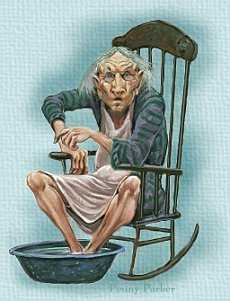
All my teeth have had to come out,
And my diet I hate to think about.
I’m overweight and I can’t get thin,
But I’m awfully well for the shape I’m in.

And arch supports I need for my feet.
Or I wouldn’t be able to go out in the street.
Sleep is denied me night after night,
But every morning I find I’m all right.
My memory’s failing, my head’s in a spin.
But I’m awfully well for the shape I’m in.

Old age is golden I’ve heard it said,
But sometimes I wonder, as I go to bed.
With my ears in a drawer, my teeth in a cup,
And my glasses on a shelf, until I get up.
And when sleep dims my eyes, I say to myself,
Is there anything else I should lay on the shelf?

The reason I know my Youth has been spent,
Is my get-up-and-go has got-up-and-went!!
But really I don’t mind, when I think with a grin,
Of all the places my get-up has been.

I get up each morning and dust off my wits,
Pick up the paper and read the obits.
If my name is missing, I’m therefore not dead,
So I eat a good breakfast and jump back into bed.
The moral of this as the tale unfolds,
Is that for you and me, who are growing old.
It’s better to say “I’m fine” with a grin,
Than to let people know the shape we are in.
I’M FINE!! HOW ARE YOU?

31 Friday Aug 2012
Posted in Daily Humour
29 Wednesday Aug 2012
Posted in Articles & Reports
‘Death Row: The Last 24 Hours’ is the title of a Discovery Channel programme about the last 24 hours of condemned individuals in the United States – for the most part concerning theHuntsville Unit in Texas. It was harrowing to watch, and it’s hard to find an appropriate adjective for the emotions it aroused; but because I cannot condone the death penalty I felt compelled to watch it and learn; and learn I did.
I firmly believe that no human being has the right to kill another human being; and that two wrongs do not make a right: end of story, I thought. But it isn’t, because I think that what I know now is not just about what goes on in death row – it’s about all of us.
At the start of the programme, a warden explains that the last 24 hours ‘do not always go to plan, but it’s routine for us’. The electric chair was invented in 1890, but not used until 1924 when 5 condemned men were electrocuted. Since a Florida chair set fire to the hair and lower legs of a man, synthetic non-flammable sponge has replaced sea sponge to pad the leather ‘head-cap’ and the lower legs are shaved. A 40s Delaware hanging went wrong when the rope stretched; so today all the ropes are tested for strength and stretched to their limit. One prisoner ordered four BLT sandwiches for his last meal, ate them, and then swallowed a number of pills in an attempt to commit suicide. When he was found to be comatose, he was, and again I quote…’brought back to life for the execution’. Continue reading

