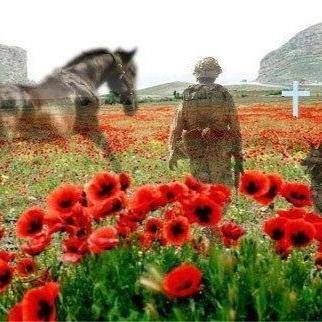
 On the 11th hour, on the 11th day, of the 11th month we will stand in silence and honour you for all that you gave, for all that you lost in order for what we all stood to gain and today take for granted.

We salute you

11 Monday Nov 2013
Posted in Remembrance
On the 11th hour, on the 11th day, of the 11th month we will stand in silence and honour you for all that you gave, for all that you lost in order for what we all stood to gain and today take for granted.
We salute you
10 Sunday Nov 2013
Posted in Articles & Reports
 Give industrial hemp a chance, it is a 9 month crop that does not need fertilizers or pesticides, actually enriches the soil and can be used for thousands of products including building houses.
Learn more by clicking this link: http://www.collective-evolution.com/2013/11/09/hemp-something-all-homes-should-be-made-of-scotland-community-begins-sustainable-housing-project/#_
09 Saturday Nov 2013
Posted in Letters
Fast Talking High Flying David Pflieger
Fiji Airways new Managing Director and CEO Stefan Pichler recently stated to the media that Fiji Airways had lost millions of dollars due to failing to keep to scheduled flights in the early to mid part of 2013 AFTER TAKING DELIVERY OF AIRBUS AIRCRAFT.
He further stated that Air Pacific had spent millions of dollars on consultants during the past three years. ( Friends and associates of Dave Pflieger?)
Coincidentally that was the period that the Attorney General sang David Pfliegers praises and danced to whatever tune he whistled.
Was the Attorney General Pfooled by David PFlieger?, it is a safe bet he was, will he ever admit it?, NEVER.
Did Fiji NEED to BUY the Airbus aircraft?, of course not, there are plenty available for leasing.
Did we need replacement aircraft?, YES, but it would have made much more economic sense to use Boeing Aircraft since all our pilots are familiar with them.
The fact that seems to have been ignored is that Fiji Airways / Air Pacific belongs to the People of Fiji and Qantas, it is not a toy for the Attorney General to play with and he should be accountable to the people and the courts of Fiji for his incompetence..
Oh dear, we forgot, he has given himself total immunity..
REMEMBER THIS WHEN YOU VOTE IN 2014
http://www.fijivillage.com/?mod=story&id=071113b7850781dc746b06e785b896
09 Saturday Nov 2013
Posted in Daily Humour
 In the greatest days of the British Empire, a new commanding officer was sent to a jungle outpost to relieve the retiring colonel.
After welcoming his replacement and showing the courtesies (gin and tonic, cucumber sandwiches) that protocol decrees, the retiring colonel said – “You must meet Captain Smithers, my right-hand man, God, he’s really the strength of this office. His talent is simply boundless.”
Smithers was summoned and introduced to the new CO, who was surprised to meet a toothless, hairless, scabbed and pockmarked specimen of humanity, a particularly unattractive man less than three foot tall.
“Smithers, old man, tell your new CO about yourself.”
“Well, sir, I graduated with honours from Sandhurst, joined the regiment and won the Military Cross and Bar after three expeditions behind enemy lines.
I’ve represented Great Britain in equestrian events and won a Silver Medal in the middleweight division of the Olympics. I have researched the history of …”
Here the colonel interrupted, “Yes, yes, never mind that Smithers, the CO can find all that in your file. Tell him about the day you told the witch doctor to get fucked.”
09 Saturday Nov 2013
Posted in Daily Humour
 A man from Fiji recently died and went to Heaven. As he stood in front of the Pearly Gates, he saw a huge wall of clocks behind him. He asked, “What are all those clocks?”
St. Peter answered, “Those are Lie-Clocks. Everyone who has ever been on earth has a Lie-Clock. Every time you lie, the hands on your clock move.”
… “Oh”, said the man. “Whose clock is that?”
“That’s Mother Teresa’s”, replied St. Peter. “The hands have never moved, indicating that she never told a lie.”
“Incredible”, said the man. “And whose clock is that one?”
St. Peter responded, “That’s Abraham Lincoln’s clock. The hands have moved twice, telling us that Abraham told only two lies in his entire life.”
“Where can I see Aiyaz Sayed-Khaiyum’s clock?” asked the man.
St Peter replied, “We’re using it as a ceiling fan.”
08 Friday Nov 2013
Cabinet ministers;
Your Excellencies;
Members of the Diplomatic Corps;
Distinguished Guests;
My fellow Fijians:
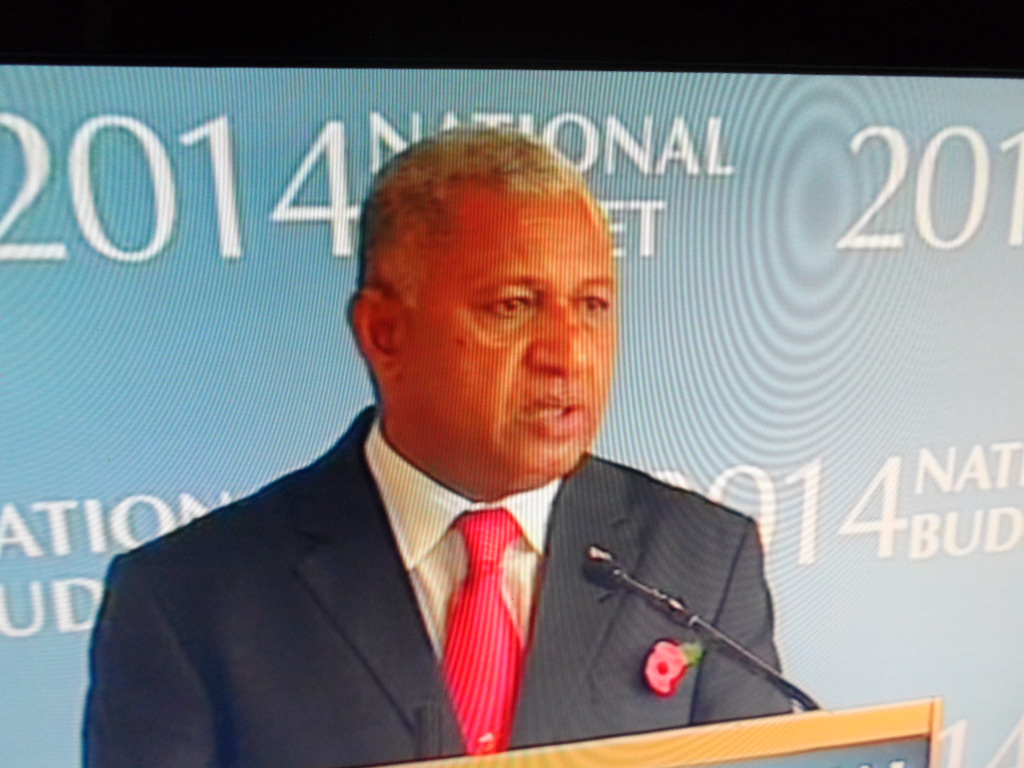
It is my task today as your Prime Minister and Minister for Finance to present to you the 2014 budget.
Next year will go down in our history as the year that Fiji first embraced genuine parliamentary democracy and set a new constitutional course towards a brighter future for every Fijian. It will mark the culmination of my Government’s efforts to put in place changes that will yield long-term benefits for Fiji and all Fijians.
We have a new Constitution to guide us, one that will allow Fiji to prosper as a united nation.
For the first time, Fijians have a Constitution that protects a wide range of civil, political and socio-economic rights.
For the first time, Fijians have a Constitution that demands accountability and transparency from Government officials, which builds strong institutions, and enshrines principles that are at the heart of all the world’s great liberal democracies.
For the first time, our nation has a Constitution that establishes a common and equal citizenry, without denying anyone’s individuality or culture.
The Constitution recognises and protects the indigenous peoples of Fiji and their unique customary practices, culture, tradition, language and communal ownership of land.
At the same time, it also protects the rights of all other Fijians, including the rights of tenants and lease holders.
The provision of rights, ladies and gentlemen, is not a zero sum game as was professed previously and is unfortunately preached by some even today. We all can enjoy equal rights and also at times specific rights, but without having to take them away from others.
In these seven years of my Government, we have worked methodically to try to resolve some of our long-standing problems with lasting solutions.
Some of these problems we inherited from our colonial past and we ignored them for far too long. Some of these problems were created by post-independence political leaders who cared more for short-term political gain than for the long-term benefit of the nation, or who simply lacked vision, acumen or the necessary concern for the Fijian people.
I am proud to say that we have not shied away from making decisions necessary to guarantee a bright future for our children and grandchildren. Not all these decisions were politically popular at the time, but they were important to modernise Fiji for the long term and to create a society in which there is more opportunity for everyone.
I am satisfied as I look back at what we have accomplished. Each year we have tackled new problems, and you and I can see the results.
We have made government services more readily available to more people than ever before. We have reformed social welfare to give more help to the neediest while creating opportunities for them. We have established partnerships with the private sector and are reforming state owned enterprises. We have revitalised the sugar industry, created a sustainable mahogany industry, and made our ports efficient. We have embarked on an ambitious program to correct the deplorable condition of our roads. We have begun reforming the civil service to make it more professional, accountable, and results-oriented. Continue reading
Posted by fijipensioners | Filed under Articles & Reports
07 Thursday Nov 2013
Posted in Daily Humour
 Never let the truth influence a wild assumption Mick
REMEMBER THIS WHEN YOU VOTE IN 2014
Full story:
http://www.fijivillage.com/?mod=story&id=0711138e8c53ffc3856db01556e531
07 Thursday Nov 2013
07 Thursday Nov 2013
Posted in Articles & Reports
 John Howard: One Religion Is Enough
06 Wednesday Nov 2013


 Fiji Pensioners