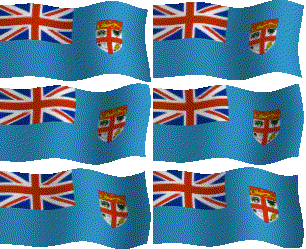
Our Fiji Flag

IMG_0224

This is my Flag, it is tattered and torn, it has recently been verbally abused by people who should know better, good men have, since 1970, given their lives for this very flag, they and the flag demand the respect of us all.
My flag embodies symbols from Fiji’s original flags going back over 140 years, it is my flag because I have spent the majority of my life under this flag and I respect the people who have made sacrifices for our nation under our flag, which include the men and women who gave their lives, the colonialists who shaped our nation and brought the rule of law, people like Gwynn Watkins who was responsible for one of the largest plantations of mahogany in the world, which our nation is now reaping the benefit of.
Commander Stan Brown, who the PM may remember if he thinks carefully, a man who loved Fiji and always had her best interests at heart, could and has been referred to as a colonialist.
Change is the only constant in this world we live in, and change to the Fiji flag
​ may be inevitable​, ​but my flag, your flag, the flag of our nations departed, does not need to be subjected to criticism and ridicule, our Flag deserves a guard of honour at it’s burial and a 21 gun salute, which is more than one can say of it’s critics.

Rick Rickman
Active Pensioner

Save Shirley Park

Temporary Democracy

Portrait_of_The_Hon._Alexander_Fraser_Tytler,_Lord_Woodhouselee

In 1887 Alexander Tyler, a Scottish history professor at the
  University of Edinburgh , had this to say about the fall of the
  Athenian Republic some 2,000 years prior: “A democracy is always
  temporary in nature; it simply cannot exist as a permanent
  form of government. A democracy will continue to exist up until
  the time that voters discover that they can vote themselves generous
  gifts from the public treasury. From that moment on, the majority
  always votes for the candidates who promise the most benefits from
  the public treasury, with the result that every democracy will finally
  collapse over loose fiscal policy, (which is) always followed by a
  dictatorship.”

As Transparent as a Brick Wall

fnpf
IN the Bainimarama Government’s campaign to “spread democracy in Fiji”, the Fijian Elections Office has also been required to supervise elections of union officials.

The justification has been that some trade union officials have not been fully transparent and accountable to the union members, whose fees paid for their allegedly high salaries.

But why is the Bainimarama Government not democratising the most important “legally enforced union”, the Fiji National Provident Fund (FNPF)?

In contrast to unions with a few hundred or thousand members at the most, FNPF has more than 200,000 members, with accumulated funds amounting to more than the assets of all the banks combined.

With not a single one of whose board members are elected by the members, this is the most important institution that should be democratised, next to Parliament.

Given that it is unlikely to happen through parliament, there has to be a movement for democratising FNPF (MFDF) outside of parliament.

National elections

and true democracy

In the run-up to the September 2014 elections, the Bainimarama Government often announced voters were about to enjoy the “most democratic” elections ever, for the government of their choice, rigorously supervised by the Fijian Elections Office.

Indeed, the more discerning citizen has already seen the real “power of democracy” at work under the Bainimarama Government, which two years before the elections, realised they had better serve the voters, if they wanted to return as government.

The Fiji Bureau of Statistics data on Gross Domestic Product, employment and incomes all indicate the economy largely stagnated from the 2006 coup until 2011. Continue reading →