• About
  • Be Informed
  • Burness Case: Up-dates-scroll down
  • No Going Back
  • PETITION
  • The Destructiveness of Vanity

Fiji Pensioners

~ GREY POWER

Fiji Pensioners

Category Archives: Articles & Reports

World Press Freedom Day May 3rd

12 Sunday May 2013

Posted by fijipensioners in Articles & Reports

≈ 7 Comments

SS2Limitations on Media Freedom can only be imposed in a free and democratic society and must be reasonable and justifiable in such a society.

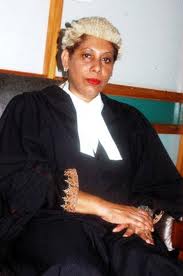
By Dr Shaista Shameem

Adapted from Article 19 as applicable to Fiji in view of recent statements and speeches made about limits to freedom of expression in the Fiji context.

Most expression is completely harmless and protected under the right to freedom of expression from interference by the state.

However, ‘seeking, receiving and imparting information or ideas’ includes expression which few societies could tolerate, such as incitement to murder, promotion of racial discrimination, or sale of pornography to children. As a result, freedom of expression is not absolute and can be limited when it conflicts with other individual or group rights. 

BUT, international law declares freedom of expression to be the rule. Limitations are the exception, permitted and justified in a free and democratic society ONLY to protect:

the rights or reputations of others

national security

public order

public health

established and universal (not necessarily religious) morals, for example ban on cruelty to children, sexual slavery, labour trafficking, expression of hate speech.

Limitation is legitimate if it is stated in a domestic law BUT, this law must fall within the very narrow conditions defined in the three-part test in Article 19(3) of the ICCPR:


1. ‘…PROVIDED BY LAW…’

The right to freedom of expression cannot be limited at the whim of a public official, particularly in an authoritarian context. They must be applying a law or regulation that is formally recognized by those entrusted with law making, i.e, parliament.

The law or regulation must meet standards of clarity and precision so that people can foresee the consequences of their actions. Vaguely worded edicts, whose scope is unclear, will not meet this standard, and are therefore not legitimate. For example, vague prohibitions on ‘sowing discord in society’ or ‘painting a false image of the State’ would fail the test.

The rationale

It is only fair that people have a reasonable opportunity to know what is prohibited, so that they can act accordingly

A situation where officials can make rules on a whim is undemocratic. Decisions limiting human rights must be made by bodies representing the will of people

Vague laws will be abused. They often give officials discretionary powers that leave too much room for arbitrary decision-making

Vague laws have a ‘chilling effect’ and inhibit discussion on matters of public concern. They create a situation of uncertainty about what is permitted, resulting in people steering far clear of any controversial topic for fear that it may be illegal, even if it is not.

2. ‘…LEGITIMATE  AIM…’

There must be a legitimate aim to limit the right to freedom of expression. The list of legitimate aims is not open-ended. They are provided for in Article 19(3) of the ICCPR: ‘…respect for the rights and reputations of others, and protection of national security, public order (ordre public), public health or morals’. They are exclusive and cannot be added to.

The rationale

Not all the motives underlying governments’ decisions to limit freedom of expression are compatible with democratic government. For example, a desire to shield public institutions of the state (i.e. who are paid by the public purse) from criticism can never justify limitations on free speech

The aim must be legitimate in purpose and effect. It is not enough for a provision to have an incidental effect on one of the legitimate aims. If the provision was created for another reason, it will not pass this part of the test.

3.‘…NECESSITY…’

Any limitation of the right to freedom of expression must be truly necessary. Even if a limitation is in accordance with a clear law and serves a legitimate aim, it will only pass the test if it is truly necessary for the protection of that legitimate aim. If a limitation is not needed, why impose it?

In the great majority of cases where international courts have ruled national laws to be impermissible limitations on the right to freedom of expression, it was because they were not deemed to be ‘necessary’.


The rationale

A government must be acting in response to a pressing social need, not merely out of convenience. On a scale between ‘useful’ and ‘indispensable’, ‘necessary’ should be close to ‘indispensable’

A government should always use a less intrusive measure if it exists and would accomplish the same objective. For example, shutting down a newspaper for defamation is excessive; a retraction (or perhaps a combination of a retraction and a warning or a modest fine) would offer the victim of defamation adequate protection

The measure must impair free expression as little as possible. It should not restrict in a broad or untargeted way, as that could interfere with legitimate expression. For example, it is too broad to ban all discussion about a country’s armed forces in order to protect national security

The impact of the measure must be proportionate and the harm that it causes to free expression must not outweigh its benefits. For example, a limitation that provides only partial protection to someone’s reputation but seriously undermines free expression is disproportionate

A court must take into account all of the circumstances at that time before deciding to limit freedom of expression. For example, it could be legitimate to limit freedom of expression for national security reasons during a conflict but not during peacetime

The European Convention on Human Rights (ECHR) narrows the third test by requiring limitations to be ‘necessary in a democratic society’. This wording is preferable as it clarifies that the purpose of the limitation must never be to shield governments from either criticism or peaceful opposition.

Courts have broadened public criticism of state institutions, even of itself, in non-democratic contexts- the test is whether it is ‘fair comment’ in all the circumstances of the case. Of course courts also have to be cautious that they would survive in that context- nevertheless, the broader picture is survival of access to justice and not just to law which could be draconian.

WHAT IS A ‘LIMITATION’ OR ‘RESTRICTION’?

International courts have generally judged that any action by a public body that has an actual effect on people’s freedom of expression constitutes a ‘restriction’ or ‘limitation’.

The nature of the action is irrelevant. It could be anything from a law to an internal disciplinary measure

The nature of the public body is irrelevant. It could be legislative, executive or judicial, or a publicly owned enterprise

The extent of the action’s impact is irrelevant. Any discernible effect on the ability of one or more people to express themselves freely is a restriction.

The ECHR again narrows the definition of a limitation, requiring the three-part test to apply to any “formalities, conditions, restrictions or penalties” under Article 10(2).

Ultimately, any individual freedoms, including of the media, can be limited by individuals deciding in concert, for example through a parliament. Without that consensus-based decision, a limitation on freedom which may be imposed by any of the arms of the state will consistently be held up to public scrutiny and criticism. 

The draft 2013 Constitution in Fiji, by removing the words ‘as long as the limitation is reasonable in a free and democratic society’ from the Bill of Rights chapter encourages greater public scrutiny of limitations placed on people’s rights, including freedom of expression and the media.

The legal foundation of Freedom of the Media is the people’s right to information. 

If the mass media are controlled or managed (by self-censorship, by multi-national companies, or by state law or judicial decisions), it means that the people do not have access to vital information that may affect their lives and livelihood.

Dr Shaista Shameem was a journalist with the Fiji Times and Herald 1976-1979 and columnist 1979-1983.

Will the AG take Dr. Shaista Shameems advice?

06 Monday May 2013

Posted by fijipensioners in Articles & Reports

≈ 2 Comments

Shaista ShameemComments on the Government’s draft Fiji Constitution 2013 in response to Government’s request for feedback

By Dr Shaista Shameem

My few short comments on the Government’s draft 2013 Constitution are as follows:

1. General

The main principles of constitutional governance promoted by the Government in its public statements are:

(i) elimination of institutionalised racial discrimination; 

(ii) elimination of corruption and bad governance; and 

(iii) protection of all constitutional rights, including economic, environmental and social rights.

2. Whether the draft Constitution 2013 is consistent with the Government’s expressed principles of constitutional governance and with international law. 

(i) Elimination of institutionalised racial discrimination

 The draft Constitution 2013 provides equal rights for all irrespective of race or ethnicity. 

Problem:

The draft does not accord with important 2012 recommendations of the United Nations Committee on the Elimination of All Forms of Discrimination which Fiji is obliged to follow as a State Party to the International Convention on the Elimination of All Forms of Discrimination. 

The CERD Committee recommended to the Fiji Government as follows:

(a) Disaggregated data to be made available on the socio-economic situation of Fiji’s different ethnic groups to show which groups suffer socio-economic disadvantage

(b) Fiji to impose special measures (affirmative action) to improve the participation of minority groups in public administration and politics since, currently, minority groups are disadvantaged in these areas. Any special measures to be based on disaggregated data which should be publicly available.

(c)  Fiji to enact specific legislation against racial discrimination- especially law    which criminalises racial motives as an aggravating factor in criminal activity.

(d) Fiji to secure the free, prior and informed consent and consultation of the indigenous peoples regarding their permanent rights as a group.

(e) In 2013 Fiji to report back to the Committee on (i) minority participation in public and political life and its affirmative action plans to restore balance in these areas; (ii) disaggregated data on protection of economic, social and cultural rights of minority groups; and (iii) rights of indigenous peoples.

My Recommendations on (i): 

(i) that the Fiji Government ensure that the draft 2013 Constitution is consistent with the 2012 recommendations of the CERD Committee so as to eradicate institutionalised racial discrimination in Fiji..

(ii) that the Fiji Government declare, in good faith and in adherence to its own theory of constitutional governance, that individuals and groups in Fiji can petition the CERD Committee through the Article 14 procedure of the Convention on the Elimination of All Forms of Racial Discrimination: 

Art. 14 CERD:  A State Party may at any time declare that it recognises the competence of the Committee to receive and consider communications from individuals or groups of individuals within its jurisdiction claiming to be victims of a violation by that State party of any of the rights set forth in this Convention.

(ii) Elimination of Corruption and Bad Governance

The draft 2013 Constitution contains the section 141 provision on accountability and transparency of all public officers in the declaration of their assets, liabilities and financial interests.

Whistleblowers will be protected by law.

Problems:

(i) There is a clash between section 141 wide-ranging right of the public to personal information of public officers and the right to personal privacy protected by section 24, as well as the right to security (especially security of family members including children) provided by section 130 (2) of the Constitution.

 (ii) The removal of the Office of Ombudsman from the draft 2013 Constitution means that the free service previously available for people alleging mal-administration or misconduct by public officers has been eliminated.

My Recommendations on (ii): 

(i) Section 141 should contain limitations on the type and extent of public access to personal information

(ii) The Ombudsman’s Office as a free (constitutional) public service for investigation of maladministration should be retained in the Constitution (as per the People’s Charter) despite the new section 16 Executive and Administrative Justice which can only be enforced by the courts, thus making it expensive and cumbersome for the ordinary people to access.  

(iii) Constitutional protection of all human rights, including economic, environmental and social rights

Additional rights have been formally included in the Government’s draft Constitution, incorporating elements from the Social Justice (Compact) provisions of the 1997 Constitution. 

Problems: 

(i) The Bill of Rights provisions do not include an important clause to curb absolute state authority – missing is the phrase ..’as long as it (State limitation of rights) is reasonable and justifiable in a free and democratic society’.  This phrase was included in all the relevant provisions of the 1997 Constitution and is a feature of international human rights law. 

The phrase means that it is permitted for a State to limit some (not all) fundamental rights as long as those limitations ‘would be reasonable and justifiable in a free and democratic society’.

This is the most serious flaw in the Government’s draft Constitution and affects the whole Constitution because it allows any government to impose limits on people’s rights even if those limits would not be allowed in a free and democratic society. The lack of justification of state limitations of rights to the courts is not cured by Sections 3 and 7 interpretation sections of the 2013 draft Constitution. 

(ii)  The definition of human rights is not included in the interpretation section of the Constitution

My Recommendation on (iii) 

(i) The phrase ‘…as long as the limitation is reasonable and justifiable in a free and democratic society’ should be included in each relevant rights limitation in the Constitution. Without that inclusion, the Government’s draft Constitution 2013 is not fully human rights compliant, contrary to the Government’s statements to the people that their rights are protected by its draft. 

(ii) In view of the double-entrenchment of the Constitution – because any amendment can only be made by both Parliament and a public referendum with two thirds majority of the registered voters voting for it- it is very important that this phrase is included in the Constitution.  

 (iii) The definition of human rights should be included in the interpretation section of the Constitution. 

3. Conclusion

Despite its good points, the Government’s draft constitution 2013 does not represent a ‘social contract’, based on equality between the people of Fiji and the State, which is the fundamental principle of constitutional law.

 In important respects it does not follow even its own expressed principles of constitutional governance.

 It is an authoritarian constitution where the State’s authority is favoured above people’s rights, as evidenced by the Bill of Rights chapter, despite additional rights being provided. 

It also ignores the CERD Committee’s 2012 recommendations on minority group protection.

A proper and informed discussion, rather than the rushed roadshow currently being performed by government, would have allowed the people of Fiji to have a meaningful input into what would be the supreme law directing all their actions in future in their own country. 

With its draft 2013 Constitution, the Government seems to have lost a wonderful opportunity to write law in the public interest. 

TWO IMPORTANT RECOMMENDATIONS: (i) The Government should comply with the recommendations of the CERD Committee; and (ii) the people of Fiji can insist that the phrase ‘…as long as any limitation (of rights) is reasonable and justifiable in a free and democratic society’ be added to each relevant provision of the Bill of Rights chapter. The inclusion of this phrase will cure many of the shortcomings of the Government’s draft Constitution 2013.

April 2013

Surgery of Tomorrow

02 Thursday May 2013

Posted by fijipensioners in Articles & Reports

≈ 1 Comment

Click on the following link for an insight of what is to come:
http://www.youtube.com/embed/IfJemqkby_0?rel=0

What OFFICE, this mans office ?

02 Thursday May 2013

Posted by fijipensioners in Articles & Reports

≈ 1 Comment

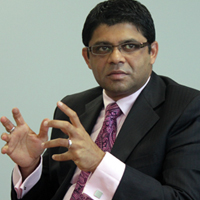
ASK 3As work begins on analyzing the public submissions on the draft constitution, Attorney General Aiyaz Sayed-Khaiyum said they understand that some members of the public want further elaborations to certain sections.

Sayed-Khaiyum said for example, although itaukei land is protected with all other types of property and culture in the Bill of Rights, some people have said that they want a specific section on itaukei land.

Sayed-Khaiyum said that he cannot say which specific amendments will be made because the Office is in the process of looking at all the submissions.

It is common knowledge that this man is running Fiji, HE makes the rules that we all have to live by, HE plays the tune that everyone has to dance to…EVERYONE.. EVERYONE … just think about it for a few minutes Frank

Who will approve submissions? HE WILL, so do not expect any amendments HE does not like..

Rumbles in the Jungle ???

26 Friday Apr 2013

Posted by fijipensioners in Articles & Reports

≈ Leave a comment

VoreaActing Prime Minister and Attorney General Aiyaz Sayed-Khaiyum said people should stop creating issues that do not exist in relation to iTaukei land when it comes to the land bank system.

While responding to questions raised by former Permanent Secretary for Works, Anasa Vocea in the draft constitution session in Nasinu, Sayed-Khaiyum said the government is not taking over i-Taukei land under the land bank system.

Vocea said he wants to know why the Prime Minister is making the decision on this

It is all a matter of TRUST and for some strange reason there seems to be very little of it.

Robbie Burns to the Rescue

23 Tuesday Apr 2013

Posted by fijipensioners in Articles & Reports

≈ Leave a comment

Only general prayers allowed at goverment functions when Fiji becomes secular state.
When asked on how the government departments will handle prayers at functions when the constitution is adopted, Acting Prime Minister and Attorney General Aiyaz Sayed-Khaiyum said a prayer can be said that is acceptable to all.

BurnsRobbie Burns Selkirk Grace can now be used by all.

Scots:
Some hae meat and canna eat,
And some would eat that want it;
But we hae meat, and we can eat,

Sae let the Lord be thankit.

Fijian:
E so e tu vei ira na leweni manumanu qai sega ni rawa ni kania
E so e rawa ni kania, na ka era vinakata
Ia, e tu vei ira na leweni manumanu qai sega ni rawa ni kania
Me da vaka vinavinaka ga vua na Kalou.

Hindi:
कुछ hae मांस और भंग खाते हैं,
   और कुछ यह चाहते हैं कि खाना होगा;
लेकिन, हम मांस hae, और हम खा सकते हैं
   Sae प्रभु thankit हो.

Chinese:
一些肉HAE和美人蕉吃的,
  有些人会吃的希望;
不过,我们虽生的肉,我们可以吃,
  SAE让主thankit。

Arabic:

بعض اللحوم هاي والقنا أكل،
   وسوف تأكل بعض الذين يريدون ذلك؛
لكننا هاي اللحوم، ونحن يمكن أن تأكل،
   اسمحوا SAE الرب يكون thankit.

English:
Some have meat and cannot eat,
Some have none and want it,
We have meat and we can eat.
So let the Lord be thanked for it.

Justice Delayed is Justice Denied

20 Saturday Apr 2013

Posted by fijipensioners in Articles & Reports

≈ Leave a comment

ASK 3Concerns have been raised again in the Cuvu draft constitution session by a Fiji National Provident Fund pensioner why their pension rates have been cut as part of the FNPF reform.

The Cuvu resident asked Attorney General Aiyaz Sayed-Khaiyum why this is being done to the retired persons.

Sayed-Khaiyum said in the late 1980s and 1990s, experts recommended to review FNPF pension rates which was as high as 25 percent. 

However, nothing was done.

The Attorney General said the review of the pension rates was absolutely necessary.

He had earlier stressed that the FNPF decree cannot be challenged in court however the next parliament can decide to amend or repeal the decree if they do not agree with the reform.

He said that decision will depend on the next parliament.

JUSTICE DELAYED IS JUSTICE DENIED.

Sayed-Khaiyum SHOULD BE REPLACED AS MINISTER FOR JUSTICE AND NEVER PERMITTED TO HOLD THE POSITION AGAIN

PENSIONERS SHOULD NOT VOTE FOR THIS MAN IN THE 2014 ELECTION, THEY SHOULD ALSO THINK TWICE BEFORE VOTING FOR ANY PARTY THAT SUPPORTS HIM

Message for Fiji Health Minister Neil Sharma MD

19 Friday Apr 2013

Posted by fijipensioners in Articles & Reports

≈ 1 Comment

N sharma

Minister do the children of Fiji a BIG FAVOUR, click on the following link and play Look & Learn for a few minutes

http://truththeory.com/2013/02/04/eight-reasons-why-water-fluoridation-has-failed-modern-civilization/

minority rights group international ~ Opinion

17 Wednesday Apr 2013

Posted by fijipensioners in Articles & Reports

≈ Leave a comment

MRGIFiji government must open up constitution process if it wants to achieve truly inclusive democracy, says Minority Rights Group International 

Click on the following link to see full report:

http://www.minorityrights.org/11850/reports/fiji-the-challenges-and-opportunities-of-diversity.html

Still Cannot Trust Them

17 Wednesday Apr 2013

Posted by fijipensioners in Articles & Reports

≈ 2 Comments

fnpfIs it any wonder that many of the innocent and anguished pensioners, who are being so ruthlessly selected for a reduction in income by the Fiji National Provident Fund, no longer trust the Fund?  They have lost confidence and trust in the FNPF Board chair, Ajith Kodagoda, and his fellow trustees Tom Rickets, Sashi Singh, Taito Waqa and Tevita Kuruvakadua.

These five must bear the very heavy burden of responsibility for the injustice the FNPF is now imposing on many of its middle and working class members.

The FNPF representative who has attracted most of the anger and despair of the pensioners is chief executive Aisake Taito. 

Mr Taito, as the public face and voice of the FNPF, is a catastrophe. His performances at meetings with the FNPF victims were marked by obvious impatience, evasions and arrogance. He contemptuously dismissed or ignored difficult questions and had the hide to remind frightened pensioners that they should not be “personal” about the FNPF’s plans.

Personal?  For God’s sake, of course it’s personal when your very own pension fund, that had promised your pension rate was for life, is getting ready to shaft you.  The shafting process goes right to the core of an elderly person’s life. In their autumn years their retirement plans, founded on their FNPF irrevocable pensions, are thrown into upheaval.

They face an immediate drop in their standard of living; it is harder for them to put food on the table, pay the bills, meet their medical expenses and their family responsibilities.  Those who have obligations to banks and other financial institutions based on their fixed and legally binding lifetime pensions, have been betrayed in a most cruel way.

When a despairing casualty told Mr Taito that he might now lose his home and that the Fund was “ruining our lives” the FNPF CEO appeared unmoved and unimpressed.  He showed not a shred of compassion. The complainant was merely told not to make the issue personal. Those in the audience heard this with disbelief. What sort of man was this?
 

When Mr Taito indicated in a media interview that the FNPF is enforcing its pension cuts from a position of strength, he completed the transformation of the Fund into a callous and pitiless bully.

To the hapless victims the message is clear: ‘We are strong, you are weak. So we will do what we like because we can.’

This FNPF strength Mr Taito refers to must also mean that the fund is quite capable of honouring its contracts with its members if it so wishes.

But it does not wish to. The FNPF was always going to slash the payments of those it had in its sights. Put another way it was ready and willing to default on its obligations. For make no mistake, what we are witnessing here is a default. The FNPF is brazenly failing to meet a financial obligation. No shame, no regrets and hang the consequences.

It has obligations to the pensioners who entered into irrevocable contracts with it. Those contracts could not be changed.  Even the FNPF has said this. In a statement earlier this year it emphasised that pensions were paid out monthly for as long as a member lived.

It is instructive and enlightening that, when pension rates were changed previously, current contracts were honoured.

Messrs Kodagoda, Rickets, Singh, Waqa and Kuruvakadua should reflect deeply on this. So should Mr Taito. They should not just reflect. They should examine their consciences.

Mr James Raman, a reputable citizen and former FNPF trustee, states emphatically that during his time the Board made sure that whatever decisions were taken were in compliance with trustee obligations and in accordance with the laws.

He adds: “Furthermore, the question of annuity paid to existing pensioners did not arise as it was a non-issue since pensions were paid under a legally binding contract entered (into) between the FNPF and the pensioner. To do otherwise would have been illegal. The present board should take note of this.”

Messrs Kodagoda, Rickets, Singh, Waqa, Kuruvakadua and Taito have gone into a state of deep and deadly denial on this issue of contracts. It is deadly because of the harm it is doing to their pensioners.

Mr Taito, meanwhile, is asserting that the FNPF is acting within the law because the Solicitor General says so! The CEO appears to be refuting the existence of contracts.

But he has been unable to explain why Shauna Tomkins and Stephen Mason of the Promontory Financial Group, consultants to the fund, acknowledged the FNPF did have contracts with its pensioners. Mr Mason in particular should know about this. He was a special counsel with a major Australian law firm, a member of the Australian Law Reform Commission, and had worked as a parliamentary counsel.

In a report, Promontory makes at least five references to contracts FNPF has with pensioners. It talks of contract law and contracted rate – meaning the rate at which a pension is contracted. Promontory said there would be difficulty under contract law in adjusting current pensions and it assumed they would not be changed. It says sufficient funds should be set aside to ensure future payments at the “contracted rate” were met. Promontory found little support for withdrawing existing pensions, “capping” them or resetting them.

So the FNPF board now has an unavoidable duty to explain why it tossed aside this expert advice from its own consultants.

The answer must surely be that it was dead set on trashing its pensioner contracts come what may. But we need to know why it was so fixated on doing this? From where did this obsession come?

The FNPF has now decided on its unjust and cruel course of action.

 But many questions and issues remain. They will not go away now, or in the future.  They will haunt the Fund and the current trustees.

 If the FNPF is so certain that it does not have contractual obligations, why is it afraid to confront that question in court?  Why is it a party to an iniquitous decree that robs its own members of a fundamental legal right?   When Mr Taito speaks of acting from a position of strength, is he referring to the savage force of the decree?

Are the FNPF trustees prepared to go down in history as the perpetrators of the Great Contract Smashing? Are they ready to take responsibility for making Fiji into a land of broken contracts?

They know very well that observance of the law of contracts is vital for creating and maintaining commercial, investment and community confidence. The businessmen among them have an especially keen understanding of this.

 If the law governing contracts is broken, an economy is damaged and investors shy away. Without investment an economy cannot produce enough jobs.

If the FNPF – Fiji’s largest financial institution – has dumped contracts once, what is there to stop it doing so again?  Why should members ever trust the FNPF?

Messrs Kodagoda, Rickets, Singh, Waqa, Kuruvakadua and Taito: Hear this. Our struggle continues against all your power and strength. It will end when we have the justice to which we are entitled.

← Older posts
Newer posts →

Subscribe

  • Entries (RSS)
  • Comments (RSS)

Archives

  • April 2026
  • March 2026
  • February 2026
  • January 2026
  • December 2025
  • November 2025
  • October 2025
  • September 2025
  • August 2025
  • May 2025
  • January 2025
  • December 2024
  • November 2024
  • August 2024
  • July 2024
  • February 2024
  • December 2023
  • September 2022
  • June 2022
  • February 2021
  • August 2020
  • February 2020
  • October 2018
  • September 2018
  • March 2018
  • January 2018
  • December 2017
  • October 2017
  • June 2017
  • May 2017
  • November 2016
  • July 2016
  • June 2016
  • March 2016
  • February 2016
  • January 2016
  • December 2015
  • November 2015
  • October 2015
  • September 2015
  • August 2015
  • July 2015
  • June 2015
  • May 2015
  • April 2015
  • March 2015
  • February 2015
  • January 2015
  • December 2014
  • November 2014
  • October 2014
  • September 2014
  • August 2014
  • July 2014
  • June 2014
  • May 2014
  • April 2014
  • March 2014
  • February 2014
  • January 2014
  • December 2013
  • November 2013
  • October 2013
  • September 2013
  • August 2013
  • July 2013
  • June 2013
  • May 2013
  • April 2013
  • March 2013
  • February 2013
  • January 2013
  • December 2012
  • November 2012
  • October 2012
  • September 2012
  • August 2012
  • July 2012
  • June 2012
  • May 2012
  • April 2012
  • March 2012
  • February 2012
  • January 2012
  • December 2011
  • November 2011
  • October 2011
  • September 2011
  • August 2011
  • July 2011

Categories

  • Articles & Reports
    • Link Information
  • Daily Humour
  • Health Hints
  • Letters
    • Grey Power Editor
    • Letters to FNPF
    • Unpublished Letters
  • OBITUARIES
  • Polls & Surveys
  • Press Releases
  • Quotations
    • Remembrance
  • Recipes

Meta

  • Create account
  • Log in

Create a free website or blog at WordPress.com.

Privacy & Cookies: This site uses cookies. By continuing to use this website, you agree to their use.
To find out more, including how to control cookies, see here: Cookie Policy
  • Subscribe Subscribed
    • Fiji Pensioners
    • Join 35 other subscribers
    • Already have a WordPress.com account? Log in now.
    • Fiji Pensioners
    • Subscribe Subscribed
    • Sign up
    • Log in
    • Report this content
    • View site in Reader
    • Manage subscriptions
    • Collapse this bar
 

Loading Comments...