Choosing When To Go

LKYChoosing When To Go by Lee Kuan Yew 

Life is better than death. But death comes eventually to everyone. It is something which many in their prime may prefer not to think about. But at 89, I see no point in avoiding the question. What concerns me is: How do I go? Will the end come swiftly, with a stroke in one of the coronary arteries? Or will it be a stroke in the mind that lays me out in bed for months, semi-comatose? Of the two, I prefer the quick one.

Some time back, I had an Advanced Medical Directive (AMD)) done which says that if I have to be fed by a tube, and it is unlikely that I would ever be able to recover and walk about, my doctors are to remove the tube and allow me to make a quick exit. I had it signed by a lawyer friend and a doctor.

 If you do not sign one, they do everything possible to prevent the inevitable. I have seen this in so many cases. My brother-in-law on my wife’s side, Yong Nyuk Lin, had a tube. He was at home, and his wife was lying in bed, also in a poor shape. His mind was becoming blank. He is dead now. But they kept him going for a few years. What is the point of that? Quite often, the doctors and relatives of the patient believe they should keep life going. I do not agree. There is an end to everything and I want mine to come as quickly and painlessly as possible, not with me incapacitated, half in coma in bed and with a tube going into my nostrils and down to my stomach. In such cases, one is little more than a body.

I am not given to making sense out of life — or coming up with some grand narrative on it —other than to measure it by what you think you want to do in life. As for me, I have done what I had wanted to, to the best of my ability. I am satisfied

FNPF funds are secure – PM

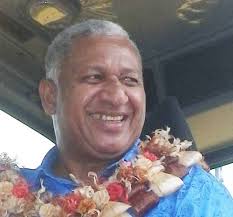
FBPrime Minister Commodore Voreqe Bainimarama has once again assured the members of Fiji National Provident Fund that their savings are secure.

However he did not mention mention illegally breached contracts and monies that had been stolen from pensioners by decrees.

Nor did he mention the fact that the FNPF have done nothing to ensure that future Fiji pensioners will have sufficient monthly pension to provide security for their retirement.

The simple fact is that future inflation will outstrip pensions and this government has done nothing to counter this in the seven years they have held power.

REMEMBER THIS WHEN YOU VOTE.

REMEMBER ALSO THAT IT WAS THIS GOVERNMENT THAT TREATED YOUR GRAND PARENTS AND PARENTS WITH CONTEMPT BY DEPRIVING THEM OF THEIR BASIC CIVIL RIGHT OF SEEKING REDRESS THROUGH THE COURTS.

THE PEOPLE OF FIJI NEED A NEW GENERATION OF YOUNG INTELLIGENT LEADERS WITH COMPASSION, HONESTY AND INTEGRITY.

Where Have all the Flowers Gone ?

SiwaibauSince independence in 1970, this last seven years have probably been the most earth-shaking for indigenous Fijians as a community, yet Fijian intellectuals seem to be in public hibernation.

A military dictatorship, with unknown advisers, is bringing about major changes to Fijian institutions: the Great Council of Chiefs has been supposedly  abolished; provincial governance structures reorganized; the laws of management of communally owned Fijian land and marine resources (some with serious environmental impacts); flagship Fijian companies such as Fijian Holdings Limited have been reorganized; controls have been placed on Fijian churches and villages; Fijian cultural symbols are being changed by decree, without their consent.

Massive changes in economic policy are affecting not just Fijians but all Fiji citizens in: taxation and expenditure of tax-payer funds, privatization and sale of public assets, restructuring of pension funds, controversial approval for new industries such as casinos and mines, a huge increase in public debt that must be paid for by future generations which will be increasingly indigenous Fijian, and much more.

The views of the Bainimarama Regime leaders are prominent every day on radio, television and in the newspapers, with extremely limited coverage given to opposing political leaders.

It is dismaying therefore that there is a deafening silence from Fijian intellectuals  from the universities and the private sector-  with the exception of a few rare individuals such as Ratu Joni Madraiwiwi or young youth leaders like Peter Waqavonovono. Continue reading →