
Posted by fijipensioners | Filed under Daily Humour

11 Thursday Apr 2013
07 Sunday Apr 2013
Posted in Articles & Reports
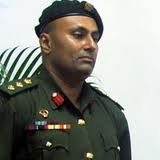
Brigadier-General Aziz said the Prime Minister had started a new political path for the nation, which was totally different from what the nation had experienced from past governments.
He said after the takeover in 2006, the Bainimarama-led Government had to attend to some sad issues from the past.
Promises, he said, had been made by politicians as a way to win quick votes, but it was rather sad that these votes were never translated into meaningful change.
The RFMF’s chief of staff said another issue which the Government had worked on was land.
“Land is usually a controversial issue and past governments used it as a political tool to gain votes from the landowners.”
However, he said very little was done compared to what’s being done by the current Government.
The Prime Minister had introduced land reforms and with these reforms more land was made available on new favourable terms and conditions.
Land reform is a priority for the development of the resource-based sector which will be mutually beneficial for both the landlords and tenants.
Brigadier-General Aziz says one of the objectives of the reforms now in place is to eradicate abuse and corruption.
The way forward for Fiji, he says, is for the Government to hear people’s concerns and act positively.
Now, he said, past politicians were ganging up and making criticisms against the Government.
“However, they have not ever put forward to members of the public their way forward for the nation.”
He said the RFMF would work with the Prime Minister to see that he retains leadership after the 2014 elections.
He urged members of the public to join the military in supporting the Prime Minister in his bid to lead the nation in 2014.
The new political direction the nation is now experiencing, according to the RFMF’s chief of staff, can only be carried forward by the Prime Minister and his Government
07 Sunday Apr 2013
Posted in Articles & Reports
 “I humbly ask for your forgiveness for the hurt I may have caused,” Archbishop Mataca
The Charter and accountability of John Samy and Archbishop Mataca
6 April 2013
The reputations of John Samy and Archbishop Mataca have taken a heavy beating from prodemocracy advocates, over the Regime’s use of the Charter in justifying the 2006 coup.
But a November 2011 letter to Commodore Bainimarama suggests that critics (including myself) may have been too harsh in their judgment of Mataca and Samy.
The People’s Charter was formulated under the chairmanship of Commodore Bainimarama and Archbishop Petero Mataca, who presented the final product to the people of Fiji.
The intellectual driving force was John Samy, an internationally respected former ADB functionary, and former Fiji senior civil servant victimized and driven out during the 1987 military coup in Fiji.
The People’s Charter and its “Pillars” of development have for six years been heavily used by the Bainimarama Regime as their primary public justification for their continued hold on government and “constitutional reform”.
While the first clause of the Charter stated that the people of Fiji would abide by and strengthen the 1997 Constitution, it was purportedly abrogated following the 2009 Court of Appeal judgment against Bainimarama.
Mataca and Samy have made no public statement on the Regime’s widespread abuse of all the praiseworthy principles espoused in the Charter or even on the purported abrogation of the 1997 Constitution.
Their silence has been interpreted by critics as a fraud on the hundreds of thousands of Fiji people who were led to support the Charter, believing that the Regime would abide by the 1997 Constitution as clearly stated in the Charter.
But it is now clear that John Samy and Archbishop Mataca did speak out on the Regime’s abuse of the Charter principles, in a 17 November 2011 letter to Bainimarama, not previously made public.
The letter also goes a long way towards redeeming the reputations of these two individuals who clearly held strongly enough to the principles of their Charter to protest in no uncertain terms, when the Regime refused to abide by the principles of the Charter they had themselves helped formulate and approve.
This letter (coming to me via anonymous channels) raises for public debate the very neglected principle of accountability of leaders to the people of Fiji, for their past actions.
The recommendations made by Samy and Archbishop Mataca are still of relevance to the problems that Fiji faces today, and have greater weight coming from previous Regime supporters.
[Wherever the letter mentions “the principles of the Charter”, you can equally substitute the “principles of the 1997 Constitution”.]
Contents of the Letter
This is a summary of the contents of the letter, using their own words wherever appropriate, and critical statements numbered by me, for emphasis
John Samy and Archbishop Mataca pointed out that in March 2007, the following had been impressed (presumably by John Samy) on Bainimarama, his Cabinet Ministers and the Ministry Council:
1. that the Interim Government (including Fiji’s Military) did not have the legitimacy or the mandate from the people of Fiji to undertake any of the major reforms desperately needed;
2. that the IG’s Roadmap was being imposed on the people of Fiji undemocratically;
3. that it was not clear what the IG was seeking to achieve through the “Clean Up” campaign;
4. that for sustainable democratic governance, the widest possible cross-section of the Fiji public must be meaningfully involved.
It was in this context that the Regime agreed to the National Council for Building a Better Fiji (NCBBF) processes to be led by John Samy, the People’s Charter was formulated, and, eventually “approved by 64% of the adult population of Fiji”.
Samy and Mataca pointed out that they had repeatedly emphasized to the Regime that the purpose of the Peoples Charter was
5. not to replace the Constitution but to strengthen it;
6. to respect and safeguard human rights and fundamental freedoms of individuals and groups, safeguarded by adherence to the rule of law and our respect for human dignity, and
7. to hold responsible and accountable those who hold positions of leadership in communities, organizations, and at the national level.
However, with great disappointment, Mataca and Samy informed Bainimarama that since 2009
8. “a number of actions taken by the IG have signaled that it has drifted away from the spirit and key principles of the Peoples Charter, that it has betrayed the people of Fiji on its most solemn promises”.
The most significant of such disappointing signals was the
9. abrogation of the 1997 Constitution in April 2009
10. the Public Emergency Regulations, originally meant to be temporary but which has been in place for more than two years
11. restrictions on the media
12. restrictions on peoples’ basic freedoms and rights, such as those of free speech and assembly
Samy and Mataca noted
13. “the current environment in Fiji is highly controlled and it has instilled a growing sense of fear amongst the populace… more widely perceived as being repressive”.
Instead of being transparent and accountable in its governance, the IG has
14. “adopted a strong-fisted, unilateralist approach which has been increasingly alienating the very people who could be playing an active role in building broad-based consensus”.
Serious issues of transparency, accountability and overall governance have been emerging, such as
15. a few Cabinet Ministers (especially Bainimarama and the Attorney General) holding multiple portfolios
16. rumors that both were being paid exorbitant salaries, not through the Minister of Finance but a close relative of the AG, through a high-fees based contractual arrangement
17. the militarization of key institutions of the State.
These, Samy and Mataca pointed out, had fuelled the growing perception that
18. “you, your Ministers and the Military Council are now enjoying power and the benefits associated with it so much that you will not relinquish it voluntarily; that power has corrupted you all”.
More recently,
19. the IG’s handling of the FNPF issues and
20. the imposition of the Essential Industries Decree, without following the due consultation processes, had called into question whose agenda for change the IG is now pursuing, especially as they violate the key principles contained in the People’s Charter.
21. Previous supporters of the IG were “becoming increasingly disillusioned” with a “growing feeling of betrayed by you and the IG”; that instead of practicing transparent and accountable governance, you have adopted the “might-of-the-military” approach to ruling Fiji.
Their Recommendations Continue reading
06 Saturday Apr 2013
Posted in Letters, Press Releases
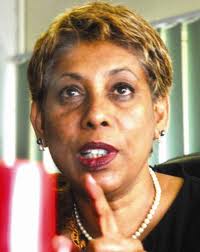 Additional comments on the draft Fiji Constitution 2013 released to the public by the Prime Minister Commodore Baninimara on 21 March 2013.
The draft 2013 Fiji Constitution released on March 21 by the Prime Minister has attracted much criticism, not all of it fair. There has been a lot of hoopla associated with the Bill of Rights (Chapter 2) provisions in the draft, for example the strident claims that they are not the same as the rights provisions in the 1997 Constitution or other constitutions. An interesting criticism is that the limitations to rights in the government’s 2013 draft are longer than the rights themselves; however, everyone should look at the limitations in the 1997 Constitution before coming to that conclusion.
In addition, these critics should carefully study the 1970 Constitution’s Fundamental Rights chapter (Chapter II) to note the limitations set out there. Even the right to life is limited in identical terms as in the government’s draft. A recent comment from one of the NGOs was that the ‘right to life’ should not be limited. If that were the case, a government could easily find it appropriate to prohibit the right to abortion. Even the UN”s Universal Declaration of Human Rights contains a blanket rights limitation- note Article 29. The International Covenant on Civil and Political Rights (ICCPR) and the Human Rights Committee do explain what these limitations mean.
In the fervour to protest against the government’s draft constitution people need to be careful not to throw the baby out with the bath water!
Of course there are some serious deficiencies in the government’s draft, including in the Bill of Rights provisions, but rights limitation clauses are not the main problem. The main problem is that there is no definition of ‘human rights’ in the interpretation section of the Constitution and one has to rely on the definition provided in the Human Rights Commission Decree 2009 which is, of course, quite wrong.
There is a very good reason for convening a constituent assembly as promised and that is that some of the inconsistencies in the government’s draft can be discussed and ironed out. The public meetings that are being held currently by the government are not sufficient for the technical exercise that is required to draft a legally robust constitution for the future.
Dr Shaista Shameem
April 6 2013.
05 Friday Apr 2013
Posted in Articles & Reports
 Lawyer Richard Naidu on the rule of law in Fiji
Richard Naidu explains in simple language the deficiencies in the proposed Fiji Constitution relating to the Governments intended control of the Judiciary and the dangers it represents:
Click the following link:http://www.youtube.com/watch?v=kv_cLZ9WchQ >
04 Thursday Apr 2013
Posted in Letters
 Open Letter to the Prime Minister
Dear Prime Minister, Greetings from New Zealand!
04 Thursday Apr 2013
Posted in Articles & Reports

Spare a few minutes to read the full obituary of a hero who set benchmarks in in his life.. Just click the following link:> http://www.telegraph.co.uk/news/obituaries/military-obituaries/special-forces-obituaries/9961915/Fred-Marafono.html?fb
03 Wednesday Apr 2013
Posted in Articles & Reports


03 Wednesday Apr 2013
Posted in Articles & Reports

Please, please stop the ridiculous Talk Back TV shows immediately Frank. They do not do you justice and they do nothing to improve the credibility of the AG’s proposed Constitution. In short they are an embarrassment for the country.
Do the right thing Frank, do what any right thinking Prime Minister would do; refer the proposed draft to a Constituent Assembly, made up of independent intellectuals, not political wannabees, or your normal group of bum kissers that stick to you like shit to a blanket.
Let all the people of Fiji have a Constitution that we can be truly proud of.
You have the power to do this Prime Minister, exercise that power for the future of Fiji.
03 Wednesday Apr 2013
Posted in Articles & Reports
 Test pilot Tex Johnson doing an unscheduled “Barrel Roll” in a Boeing 707 Dash 80 at its initial launch.
Watch the tribute from his son, click here:
 Fiji Pensioners